How to Set Up a Cosy Winter Workspace in an Aussie Home
Australian winters are short on daylight and long on draughts, and most of us are working in whatever corner of the house we can claim. Here's how to make that corner genuinely warm, well-lit and comfortable — no renovation required.

5 min read
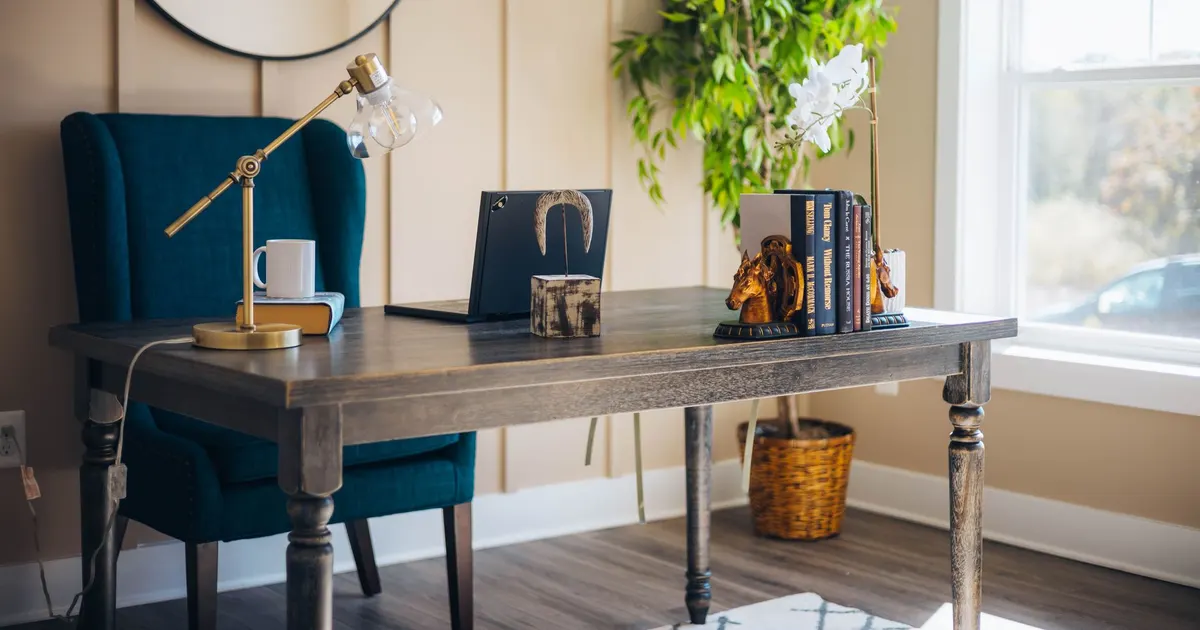
Photo: Samuel Peter / Pexels
Start with the room, not the desk
Australian winters are a strange beast. In Perth the cold arrives damp and sideways, with a sun that still shows up most days. In Melbourne it's four seasons before lunch. In Brisbane you might get through July in a jumper and a rug over your knees. So before you spend anything, work out what your actual problem is: is the whole room cold, or is it just cold where you sit?
A small room heats faster and holds warmth better than an open-plan living area, so if you have a spare bedroom, a sleepout or even a wide hallway, that's your workspace. If you don't, pick a corner away from the biggest window and away from the door that everyone walks through.
Find your winter sun
In the southern hemisphere the winter sun sits lower in the sky, which means it reaches further into a room than it does in summer. Spend one day watching where the light lands between about 9am and 3pm. That patch of floor is where your desk belongs. A north-facing window is the prize, but an east-facing one still gives you a bright, warm start to the day.
Heating a single room without frying the air
Heating one room instead of the whole house is the single biggest thing you can do. A reverse-cycle air conditioner is efficient, but it dries the air out and blows directly onto your neck if you're sitting in the wrong spot. Radiant panel heaters warm objects and people rather than the air, which suits a desk setup beautifully. Oil column heaters are slow to start but hold their warmth and run silently. Fan heaters are instant and noisy.
Aim for somewhere around 18 to 20 degrees while you're working. Warmer than that and you'll be drowsy by mid-afternoon.
Placement matters more than power
Radiant heat needs a clear line of sight to you. Tuck a panel heater beside the desk, angled towards your legs, rather than across the room behind a chair. Keep at least a metre of clearance from curtains, paperwork, bedding and anything else that could catch. Never run a heater underneath a desk with a rug or a doona draped over your lap — that's how house fires start.
Humidity is your friend
Dry air makes 18 degrees feel much colder than it is, and it wrecks your eyes and throat by the end of the day. A bowl of water near the heater, a damp towel on a clothes horse in the same room, or a small humidifier will all help. Just keep an eye on condensation — see the mould section below.
Lighting for a 5pm sunset
By June, sunset in southern Australia can fall before 5:30pm, and in Hobart it's earlier still. If you're still working when the light goes, one overhead downlight behind your head will cast your own shadow straight across the keyboard.
Three layers of light
- Ambient: a warm floor lamp or ceiling light so the room isn't a cave.
- Task: a desk lamp with an adjustable arm, placed on the opposite side to your writing hand so you're not working in your own shadow.
- Screen: a small lamp aimed at the wall behind your monitor softens the contrast between a bright screen and a dark room, which is much easier on your eyes.
Stick to warm or neutral globes in the evening. Cool blue-white light makes a room feel like a waiting room and tells your brain it's still midday.
Sort the chair before you sort anything else
Eight hours at the kitchen table will find every weak spot in your back. You want feet flat, knees roughly level with your hips, forearms level with the desk, and the top of the monitor at eye level, about an arm's length away.
Cheap fixes that genuinely work
- A firm cushion or a folded towel behind your lower back.
- A footrest — a sturdy box, a stack of books, an old esky.
- A laptop stand with a separate keyboard, so you're not hunched over a screen.
- A rug under the chair. Cold floors pull heat straight out of your feet, and tiles are the worst offenders.
Warm hands, warm feet
Cold fingers slow down typing more than you'd think. Fingerless gloves, a heat pack in your lap, or a mug you keep refilling all help. A felt or wool desk mat under your wrists makes a surprising difference on a cold surface.
Feet first, though. Wool socks plus slippers with an actual sole, not just fluffy uppers. If you're on concrete or tile, add the rug.
Dress in layers you can peel
A merino base layer, a jumper over the top, and a blanket over the back of the chair covers most of the day. A doona across your lap is fine as long as it stays clear of any heater.
Damp, mould and the winter air
Closing up a house all day traps moisture from showers, cooking and breathing. Mould loves a cold external wall, and the corner behind your desk is a prime candidate.
Open the windows wide for ten or fifteen minutes mid-morning, even when it's cold. A short, sharp air exchange loses far less heat than leaving a window cracked all day. Run exhaust fans when you shower and cook, wipe condensation off windows, and leave wardrobe doors ajar if they sit on an outside wall.
Sound and screens
More time indoors means more noise — traffic, neighbours, kids, someone's podcast. A rug, heavy curtains and a full bookshelf all absorb echo and make a small room feel calmer. If you share the house with people on calls, a simple screen or a curtain on a rail is a cheap way to carve out a bit of privacy.
A weekend setup checklist
- Move the desk into the winter-sun spot.
- Rug under the chair, mat under the wrists.
- Heater positioned with clearance and aimed at you.
- Desk lamp on the opposite side to your writing hand.
- Footrest and lower-back support sorted.
- Warm layer and a blanket on the chair.
- Air the room for ten minutes each morning.
- Check for condensation and mould weekly.
Who this is for
This is for renters who can't install anything permanent, share-house dwellers fighting over one power point, and anyone working from a cold corner of a house built before insulation was standard. If you're up north where winter is really just a cool, dry season, take the lighting, seating and mould advice and skip the heater section entirely.