Rental Tech Corner: Monitors and Docks in Small Aussie Spaces
A renter-friendly way to build a proper desk setup in a small room — no drilling, no bond drama, and gear that survives an Australian summer and a moving day.

5 min read
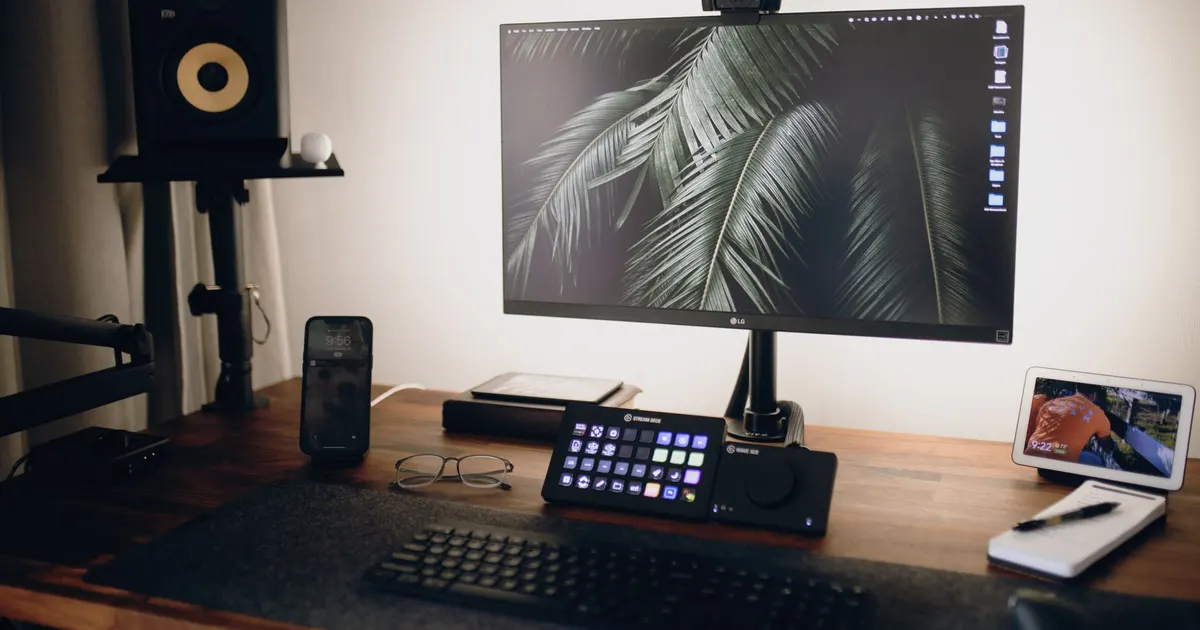
Photo: Josh Sorenson / Pexels
Start with the space, not the gear
Every rental desk I've set up has started the same way: with a tape measure and a slightly defeated sigh. The spare room is 2.7 by 3 metres, there's a built-in robe eating one wall, and a single double power point sits exactly where you'd want to put your chair.
So measure first. Then buy. It sounds obvious, and almost nobody does it.
The numbers that actually matter
- Width of the wall you'll face, and the height from skirting board to window sill.
- Where the power point is, and how far it is from the corner you want to work in.
- Which way the door swings — a door that opens inward can rule out a desk along that wall entirely.
- How deep the desk can be before you can't push the chair back.
Write it in your phone notes. When you're standing in a shop trying to picture whether something fits, those four numbers are worth more than any spec sheet.
Going up without drilling
The bond is the thing. Every hole is a conversation at the final inspection, and patching paint never quite matches. The good news is that a monitor doesn't need to be on the wall to sit at the right height.
Options that leave nothing behind:
- A freestanding monitor arm with a weighted base, or one that clamps the desk edge rather than the wall.
- A riser or small shelf that sits on the desk and lifts the screen to eye level.
- Over-door hooks and tension rods for headphones, cable pouches and a headset — no fixings at all.
- A slim leaning shelf or narrow bookcase as a vertical stand for the dock, drives and stationery.
Adhesive that comes off clean
Removable adhesive strips and hooks are the renter's best friend, but read the surface before you trust them. On fresh low-sheen paint they hold well. On textured or dusty plasterboard they let go without warning.
Heat is the real enemy. A hook stuck near a west-facing window in a Perth February will slide by mid-afternoon, taking whatever's hanging from it. Halve whatever weight the packet claims, and never hang anything breakable above your laptop.
Docks, cables and a tidy that survives a move
A dock is the single best small-space upgrade you can make. One cable to the laptop, everything else lives permanently at the back of the desk. No crawling under the desk twice a day, no ports wearing out.
Cable management that actually works in a rental:
- Velcro-style ties, never zip ties. You'll redo this layout twice a year and zip ties make that a chore.
- A clamp-on cable tray under the desk edge — no screws, and it hides the powerboard.
- Label both ends of every cable. A strip of masking tape and a pen is enough.
- A fabric sleeve for the run down the back of the desk, so it reads as one line instead of nine.
- One spare of each cable type, coiled and bagged, so a failure doesn't ruin a workday.
Power without drama
One good surge-protected powerboard mounted under the desk is safer than three cheap ones daisy-chained across the floor. Keep power bricks off carpet and out of direct sun — they run hotter than people expect.
If the room has a single outlet, an electrician isn't an option in a rental. A properly rated extension lead run along the skirting and tucked into a cable duct is the practical answer, and it looks deliberate rather than improvised.
Summer heat, small rooms and warm electronics
A dock and a monitor in a closed-up spare room on a 40-degree day get genuinely hot. A few habits help:
- Lift the laptop on a stand so air moves underneath it.
- Don't stack the dock under or behind the laptop.
- Shut the blinds on the west side before lunch, not at 4pm when the room is already an oven.
- Leave the door open, or run a fan on low across the desk rather than straight at you.
- Give the monitor a hand-width gap from the wall. Panels and power supplies both want airflow.
Direct sun on a screen is worth avoiding for its own sake — plastic housings yellow and the panel runs hotter than it needs to. If you're near the coast, salt air and humidity are the other half of the story. Ports and plugs collect a fine film over summer, so a wipe with a dry microfibre cloth every few weeks keeps connections behaving.
Winter, condensation and the corner behind the desk
Come July, the same corner that cooked in summer turns cold and damp. Push the desk a hand-width off the wall so air can move, and check behind it at the end of winter. A small moisture absorber in the corner costs little and saves a lot of cleaning.
Reverse-cycle heating dries a room out, which is fine for electronics but rough on timber veneer. A wipe with a barely damp cloth, followed by a dry-off, is all most desks need.
Sand, dust and the beach weekend
If your gear travels, sand is the enemy. A cheap external keyboard for beach-house weekends is smarter than picking grit out of your good one. At home, a soft brush and a can of compressed air once a season is plenty. Keep the dock and any drives off the floor if you're on a busy road or close to the sand.
Moving day: pack it so it survives
- Photograph the whole setup before you unplug anything. You'll thank yourself at the new place.
- One zip-lock bag per device, cables coiled and labelled, screws taped to the item they belong to.
- Monitors travel screen-in, wrapped in a bath towel, with no pressure on the panel.
- Keep original boxes if you have the storage; otherwise a sturdy archive box with towels as padding does the job.
- Pack the dock and powerboard last so they're first out at the other end.
A layout that works in a small room
- Desk centred on the long wall, a hand-width off the paint.
- Monitor on a riser or arm, top of the screen at eye level when you're sitting.
- Dock fixed to the underside of the desk with removable adhesive, cables in a clamp-on tray.
- Powerboard under the desk, one lead to the wall.
- Headphones on an over-door hook, nothing drilled, nothing patched.
Who this is for
This is for renters in small flats and share houses who want a proper desk setup without risking the bond — and who'd rather spend a Saturday tidying cables than arguing about wall patches at the final inspection.