How to Buy a Blood Pressure Monitor Online in the UK: Cuffs, Accuracy and At-Home Checks
Buying a blood pressure monitor online can feel like a shot in the dark. This guide covers cuff sizes, validation, and how to get accurate readings at home.

5 min read
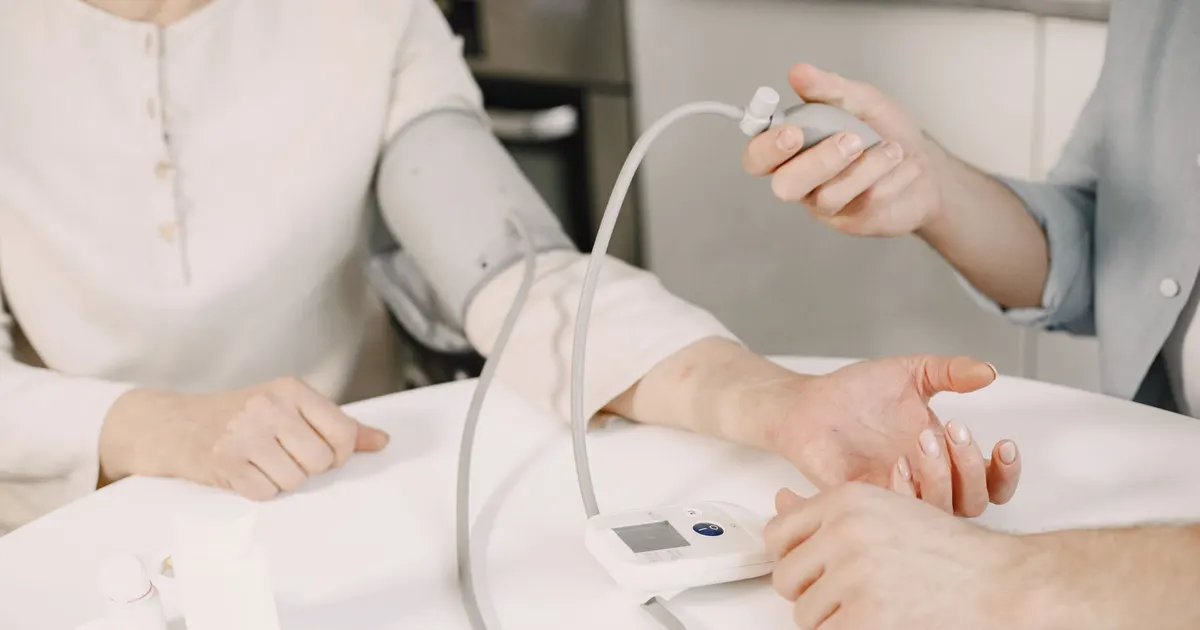
Photo: Gustavo Fring / Pexels
Why Buy a Blood Pressure Monitor Online?
Home blood pressure monitoring is increasingly common in the UK. It can help you and your GP see how your blood pressure behaves over time, rather than relying on a single reading in a surgery. Buying a monitor online opens up a wider range than your local pharmacy might stock, and you can compare specifications without pressure from a salesperson. But you also can't try before you buy, so it pays to know what you're looking for.
Upper Arm vs Wrist Monitors
There are two main types of home blood pressure monitors: upper arm and wrist. Each has trade-offs.
Upper Arm Monitors
These are generally recommended by health bodies because they tend to be more accurate and less sensitive to positioning.
Pros:
- More reliable readings for most people.
- Often clinically validated.
- Cuffs are usually interchangeable, so you can get the right fit.
Cons:
- Bulkier to store.
- Need a flat surface and correct arm position.
Wrist Monitors
Wrist monitors are smaller and easier to carry, but they can be trickier to use correctly.
Pros:
- Compact and portable.
- Easy to put on by yourself.
Cons:
- Must be held at heart level, which is easy to get wrong.
- Less accurate for some people, especially those with certain health conditions.
For most people, an upper arm monitor is the safer bet. If you do choose a wrist monitor, make sure you're prepared to follow the instructions precisely.
What to Look for in an Online Listing
Online listings can be sparse on detail, so here are the key things to check before you buy.
Clinical Validation
Look for a monitor that has been validated against a recognised protocol, such as the British Hypertension Society (BHS), the European Society of Hypertension (ESH), or the Association for the Advancement of Medical Instrumentation (AAMI). Some listings will state this clearly; others may use vague terms like "clinically tested". If you can't find a specific validation statement, be cautious.
Cuff Size and Fit
This is where many people go wrong. A cuff that's too small or too large can give inaccurate readings. Measure your upper arm circumference at the midpoint between your shoulder and elbow. Most monitors come with a standard cuff that fits a range of arm sizes, but if you're at the extremes, you may need a different cuff. Check whether the monitor allows you to swap cuffs, and whether larger or smaller sizes are available.
Memory and Multiple Users
If more than one person will use the monitor, look for one with dual-user memory or multiple profiles. This keeps readings separate and makes it easier to track trends. Even for a single user, a memory function is useful for storing readings between GP visits.
Power and Connectivity
Most monitors run on batteries, but some come with a mains adapter as well. Batteries are convenient, but a mains option can save you from running out of power. Bluetooth or app connectivity can be handy for logging readings automatically, but it's not essential. If you're comfortable with technology, it can be a nice extra; if not, a simple monitor with a large display may suit you better.
Display and Ease of Use
For older users or anyone with vision issues, a large, clear display is important. Some monitors also have voice output, which can help. Check the buttons: are they easy to press? Is the cuff simple to put on? Reading reviews can give you a sense of how user-friendly a monitor is in practice.
Accuracy: What You Can and Can't Control
Even a validated monitor can give inaccurate readings if you don't use it correctly. Here's how to give yourself the best chance of getting reliable numbers.
Positioning and Technique
- Sit quietly for five minutes before taking a reading.
- Sit with your back supported, feet flat on the floor, and legs uncrossed.
- Rest your arm on a table so the cuff is at heart level.
- Don't talk or move during the reading.
- Avoid caffeine, exercise, and smoking for at least 30 minutes beforehand.
- Take two or three readings, one minute apart, and average them.
When to Replace Your Monitor
Over time, monitors can drift out of calibration. A good way to check is to take your monitor to your GP surgery and compare its reading with theirs. If there's a big difference, it may be time to replace it. Some manufacturers offer calibration checks, but this varies.
Buying Second-Hand or Refurbished
It's possible to buy a second-hand blood pressure monitor, but it's risky. Cuffs can wear out, and the device itself may be out of calibration. If you do go down this route, make sure it's from a reputable source, and check that it has been validated. Ideally, look for a monitor that has been serviced or recalibrated. For most people, buying new is the safer option.
What About Smartwatches and Wearables?
Many smartwatches now claim to measure blood pressure. These are not usually medically validated, and they shouldn't be relied on for diagnosis or treatment decisions. They can be useful for spotting trends, but if you need accurate readings, a dedicated blood pressure monitor is the way to go.
Returns and Warranty Considerations
Before you buy, check the returns policy. For hygiene reasons, some retailers won't accept returns on opened blood pressure monitors unless they're faulty. Also look at the warranty: how long does it last, and what does it cover? A longer warranty can be a sign that the manufacturer stands behind their product, but it's not a guarantee of quality.
Practical Tips for Your First Online Purchase
- Measure your arm circumference before you start shopping.
- Read the listing carefully: cuff size, validation, power source, and memory.
- Check reviews for accuracy and ease of use, but be wary of fake reviews.
- Consider buying from a retailer that specialises in medical devices, as they may offer better advice.
- Don't pay extra for features you won't use. A simple, validated monitor is often the best choice.
A Final Word
A blood pressure monitor is a useful tool for managing your health, and buying one online is perfectly feasible if you know what to look for. Focus on validation, the right cuff size, and ease of use. With a bit of care, you can find a monitor that gives you reliable readings for years to come.