Shopping for a Wedding Guest Outfit Online in the UK: A Practical Guide
A wedding invitation asks more of an outfit than most occasions do — formality, season and terrain all in one. Here's how to choose a guest outfit online without a fitting room.

6 min read
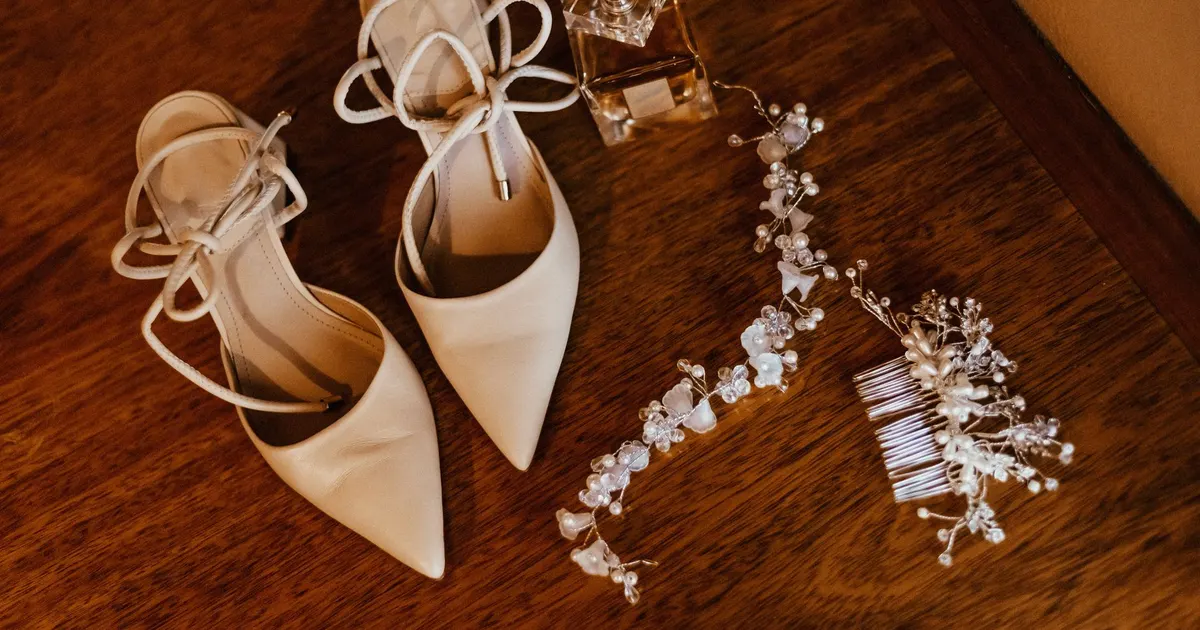
Photo: Jonathan Borba / Pexels
Start with the invitation, not the shop
Most guest-outfit shopping goes wrong before a single page is opened. The invitation tells you more than any trend list: the venue, the time of day, the dress code and how much of the day you'll spend outdoors. Read it twice, then write down three things — formality, season and terrain. Everything else follows from those.
What the dress code actually means
- Black tie — a long dress or a formal cocktail dress. Save the floaty summer frock for another weekend.
- Cocktail — knee to midi length, a bit of structure, shoes you can stand in for six hours.
- Smart casual — the trickiest of the lot. Think a well-cut dress or tailored trousers with a proper top, not jeans and a nice blouse.
- Garden party or festival — relaxed, as long as it survives grass, wind and a marquee floor.
- No code stated — match the venue. A country house hotel means smarter; a village hall means tidy but easy.
If you're unsure, ask the couple or another guest. It's a completely normal question, and far better than turning up in the wrong register.
Season and venue change everything
Spring and summer
British summer weddings are a gamble. Build in a layer — a light wrap, a cropped jacket, a fine knit in a colour that works with the dress. Bare shoulders feel lovely at two in the afternoon and grim by ten at night. Breathable fabrics matter more than clingy ones: cotton blends, crepe, linen mixes and light viscose cope with a warm church followed by a stuffy marquee.
Autumn and winter
This is where online shopping gets easier. Heavier fabrics, longer sleeves, richer colours. A midi dress in crepe or ponte with tights and boots looks deliberate rather than apologetic. Velvet is warm and forgiving. Choose a coat you'd happily wear without the dress underneath, because you'll be in it for the car park, the churchyard and the taxi queue.
Venue notes
- Church — covered shoulders, nothing too short, quiet soles on stone floors.
- Marquee — grass, uneven ground and a temporary floor that may flex underfoot.
- Registry office or town hall — no dress code, but the photographs are close-up.
- Country house or hotel — polished floors and long corridors, so a heel that grips helps.
- Outdoor ceremony — wind is the enemy of anything loose and light.
Fit when you can't try it on
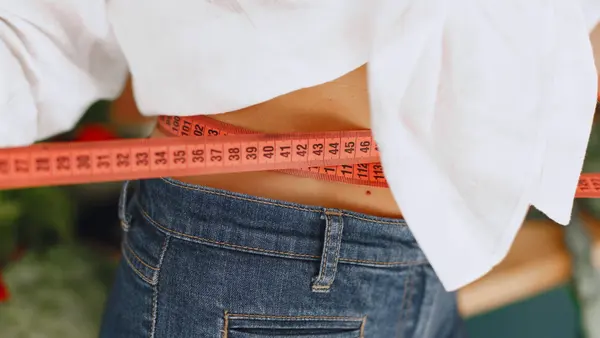
Online dress shopping fails at the bust and shoulders far more often than at the waist. Measure yourself in the underwear you'll actually wear, with a soft tape, and write the numbers down.
What to measure
- Bust at the fullest point.
- Waist at the narrowest point, usually just above the navel.
- Hips at the widest point.
- Back length from the nape to where you want the hem to sit.
- Shoulder to shoulder, if the style has defined shoulders.
What to check in the listing
- Garment measurements, not just a size label. A size in one shop is not the same as a size in another.
- Whether the fabric has stretch, and how much.
- The model's height and the size she's wearing — useful, but only as a rough guide.
- Lining. An unlined dress in a light fabric will show every seam and every shadow.
- Whether the waist is fixed or has a tie, which buys you room to adjust after a big lunch.
The try-on test at home
- Sit down. Does the waistband dig in?
- Raise your arms. Does the bodice ride up?
- Walk a few steps. Does the hem catch your legs?
- Check the back in a mirror and take a photo in daylight — that's roughly how it will look in pictures.
Fabric, colour and photographs
Wedding photos are unforgiving in specific ways. Fine stripes and small checks can shimmer on camera. Very pale colours wash out against a bright sky. Very shiny fabrics bounce flash straight back at you.
Fabrics that behave
- Crepe and ponte — drape well, hide creases, travel in a bag.
- Cotton blends — cool and comfortable, crease a little.
- Linen — beautiful in heat, rumpled by the ceremony.
- Velvet and heavier satin — excellent in winter, but they need careful pressing.
- Sequins — fun and heavy, and they shed. Check the seams before you commit.
Colour notes
- Deep colours — navy, forest, burgundy, plum — suit most skin tones and most venues.
- Prints are more forgiving of fit than a solid block of colour.
- Avoid white, ivory and anything that reads as bridal. It's the one rule that still holds.
- If the bridal party has a set colour, don't match it exactly. You'll look like a spare bridesmaid.
Shoes, layers and the practical bits
Heels, grass and cobbles
Block heels and wedges beat stilettos on grass, gravel and cobbles. If you love a thin heel, pack a flat in your bag for the walk between the car and the door. Break shoes in indoors first — a wedding is not the day to discover a blister.
What to carry
- A bag small enough to hold, big enough for a phone, a lipstick and a flat shoe if you're optimistic.
- A wrap or pashmina that works with more than one outfit.
- Plasters. Always plasters.
- A light folding umbrella in a colour that doesn't fight the dress.
Renting, borrowing and second-hand
Occasion wear is worn rarely, which makes renting sensible for black tie and for anything heavily embellished. Check the fit measurements carefully, and read the cleaning and damage rules before you commit. Second-hand is excellent for guest outfits — plenty of pieces have been worn once. Look for clear photos of seams, underarms and hems, and ask about any alterations that have been made.
A simple decision path
- Read the invitation and note formality, season and terrain.
- Choose your fabric for the weather, not the trend.
- Measure yourself and compare against garment measurements.
- Pick a colour that suits the venue and photographs well.
- Sort shoes and a layer at the same time, not the week before.
- Do a full try-on at home — sitting, walking and in daylight.
Common mistakes to avoid
- Assuming the size you wear in one shop fits in another.
- Ignoring the venue floor. Grass and gravel ruin thin heels.
- Forgetting a layer for the evening.
- Choosing something you can't sit, eat or dance in.
- Leaving shoes and accessories to the last minute.
- Wearing anything that competes with the couple.
Good guest dressing isn't about the biggest spend. It's about turning up comfortable, appropriate and able to enjoy the day — which is exactly what the couple wants from you.