The Lunchtime Walk: A Small Habit That Fits a British Working Week
A walk in the middle of the day is one of the easiest wellbeing habits to keep — and one of the first to go when work gets busy. Here's how to make it survive a British calendar, whatever the sky is doing.

6 min read
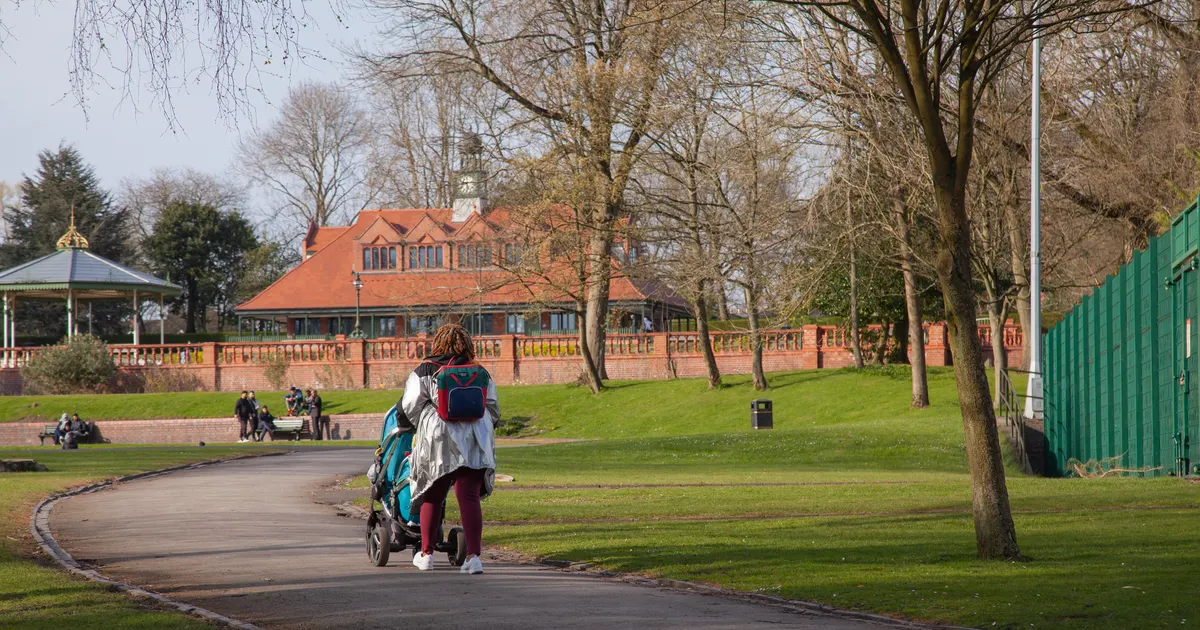
Photo: Charlie Griffiths / Pexels
Why the middle of the day is the easiest slot to defend
Most wellbeing habits fail for boring, logistical reasons rather than a lack of willpower. Early mornings compete with sleep, and for a lot of people they simply lose. Evenings compete with dinner, children, the telly, and — for a good chunk of the year — the fact that it is already dark by the time you finish work.
Lunchtime is different. It belongs to you rather than to anyone else in the house. It comes with a natural boundary at both ends. And in this country it is the most reliable daylight we get: even in December there is a usable window around midday, while in June you may find yourself looking for shade instead.
What a good lunchtime walk actually looks like
Twenty minutes, most days
This is not a hike and it is not training. Twenty minutes at a steady pace is enough to change how the afternoon feels. If twenty is impossible, ten still counts. The habit matters far more than the distance.
Route over pace
The best route is the one you will actually do on a grey Tuesday in February. A loop from the office or the front door, one you can walk without thinking, beats an ambitious plan involving a bus. Having two versions — a short one for grim weather and a longer one for good — removes the daily decision, which is where most habits quietly die.
Leave properly
Step away from the desk, not just the screen. Coat on, out of the building, phone in a pocket rather than in your hand. Half the benefit of a midday walk is the change of scene, and you only get that if you genuinely leave.
Dressing for four seasons in one lunch hour
British weather rewards layering. A few practical notes:
- Two thin layers plus a light waterproof will handle more days than one heavy coat.
- Choose a jacket you are happy to carry if the sun comes out.
- Keep a pair of comfortable trainers under the desk or by the front door, so wet-weather shoes are never the excuse.
- Spare socks in winter are a small luxury on a wet day.
- In the darker months, something reflective or brightly coloured helps you be seen on pavements and at crossings.
- In summer, a hat and a bottle of water make a longer loop far more pleasant.
Making it survive a busy week
A walk is easy to cancel because nobody is expecting it. A few small tricks change that:
- Put it in the calendar as a recurring block with a name you would not skip, such as a meeting with yourself.
- Use it for phone calls you would otherwise take at your desk. Walking and talking is a genuinely efficient way to spend twenty minutes.
- Agree it with a colleague. Knowing someone is waiting by the door at half twelve is more motivating than any app.
- On days when it rains properly, go anyway with the right coat — or shorten the loop rather than cancelling it entirely.
- On days when work is genuinely on fire, take ten minutes outside and call it a win.
Walking through the British year
Winter: light, grip and getting out at all
The goal in winter is simply to be outside in daylight. Go earlier in the day if you can, stick to lit paths if you are walking after work, and watch for ice on shaded pavements and steps. Cold air is rarely the problem; damp feet and a dark route are.
Spring: the easiest season
This is when the habit builds itself. Blossom, longer evenings, and temperatures that suit a light jacket. Use the momentum to extend your usual loop, or to add one or two walks a week that are purely for pleasure rather than a break from work.
Summer: shade and water
Midday sun in July is stronger than many of us expect. A tree-lined park, a canal towpath or a route with a bit of breeze will feel far better than an exposed high street. Take water, and consider shifting the walk to mid-morning or late afternoon on very hot days.
Autumn: leaves, mud and slipping
Wet leaves on pavements and wooden boardwalks are genuinely slippery. Footpaths through parks can turn muddy quickly, so keep a second route in mind — residential streets are usually fine when the park is not.
If you work from home
The midday walk is often easier at home, because there is no commute and no office kitchen to linger in. It also solves a common problem: the day blurring into the evening with no clear boundary.
Try treating a walk as a fake commute. A short loop at the start of the day, or one at the end, gives the day a shape that a laptop on the kitchen table never will. If you can, walk before you eat lunch rather than after — it is easier to leave when you are not full.
Small things that make a walk better
- Leave the scrolling at home. A podcast, an audiobook or nothing at all all work; a phone in your hand does not.
- Notice three things you have not seen before. It sounds twee and it works.
- Change your route once a week so the walk does not become another commute.
- Walk a little faster for the last five minutes if you want to come back feeling properly awake.
- Go with someone occasionally. A weekly walk with a friend covers both exercise and catching up.
When to be sensible
A walk is not a cure for anything, and it should not be treated as one. If you have a health condition, are recovering from illness or injury, or are pregnant, check with your GP or midwife before adding a daily walk to your routine.
On dark evenings, stick to well-lit routes, keep headphone volume low near roads, and let someone know roughly where you are going. If a route ever feels wrong, turn around. If you have mobility issues or a long-term condition that affects walking, a shorter, flatter loop, or simply standing outside for ten minutes, is a reasonable substitute.
A week you could try
- Monday: the short loop, whatever the weather. Set the tone.
- Tuesday: the longer route, phone left at the desk.
- Wednesday: walk with a colleague or a friend.
- Thursday: a walk-and-talk call you would have taken sitting down.
- Friday: somewhere new — a park, a different street, a stretch of towpath.
- Weekend: one walk without a purpose at all, ideally somewhere green.
The long game
The reason the lunchtime walk is worth protecting is that it is unglamorous. It needs no kit, no subscription and no particular weather. It fits into a working day that is already full, and it gives back the one thing a busy week tends to eat first: a bit of daylight and a bit of quiet.
Start with ten minutes this week. Same time, same loop, and see how you feel by Friday.