How to Buy a Yoga Mat Online in the UK: Grip, Thickness and Storage
A yoga mat is the one bit of kit you'll touch with your whole body, so it's worth getting right. Here's how to read the listings without ending up with a slippery, smelly mistake.

6 min read
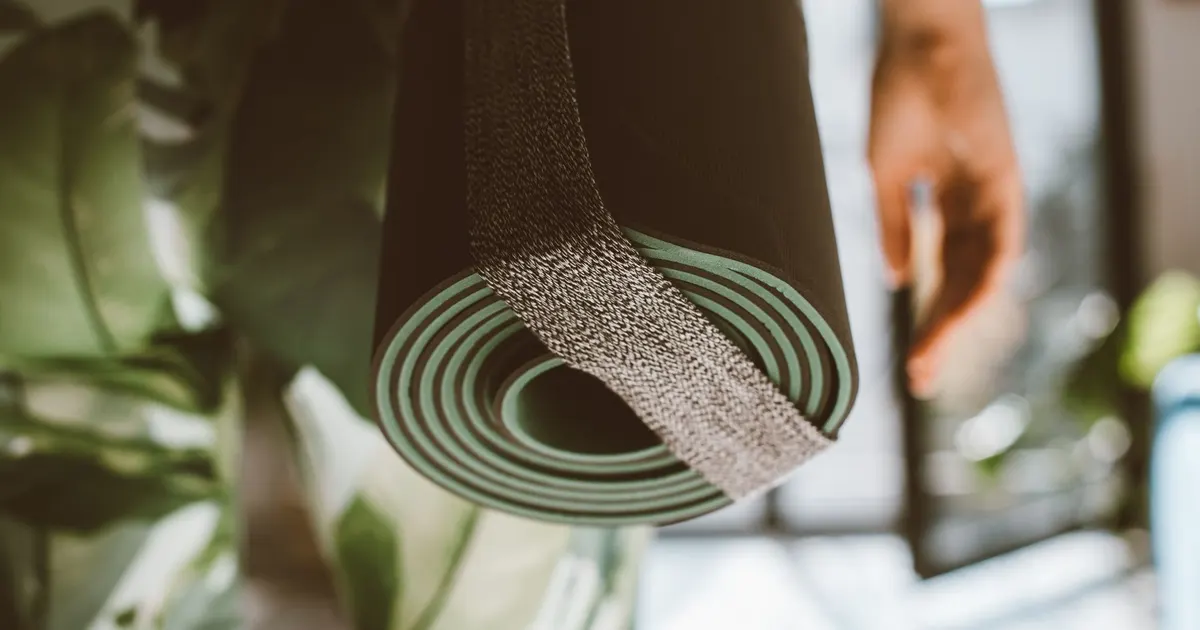
Photo: ROMAN ODINTSOV / Pexels
A yoga mat is the one bit of kit you'll touch with your whole body, several times a week, often while slightly out of breath. It's also the thing most people buy in a hurry — usually the night before their first class. Here's how to read the listings properly and end up with something you'll still be happy with in two years.
Start with where the mat will actually live
The common mistake is buying for the class you've signed up to and forgetting the floor at home. A mat that feels lovely on a sprung studio floor can feel like a slab of concrete on Victorian floorboards, and one that's perfect on carpet slides about on laminate.
So before you open a single tab, work out the two or three places this mat will be used: a leisure centre studio, a village hall with a polished floor, your front room, or the corner of a spare bedroom. That answer decides thickness, grip and weight far more than any marketing copy will.
Thickness: what the millimetres actually mean
Mats are sold by depth in millimetres, and the range is wider than it looks.
- Around 3–4mm. Thin, stable, easy to balance on. Good for standing poses where you want to feel the floor through your feet. Unforgiving on knees and wrists.
- Around 5–6mm. The middle ground, and where most people should start. Enough cushioning for seated and kneeling work, still stable enough for balance.
- 8mm and up. Proper cushioning for Pilates, stretching and floor work. Fine at home, awkward for standing poses, and noticeably heavier to carry.
If you do a bit of everything, the middle is the sensible buy. If your knees or wrists complain, go thicker for home and keep a thin one for class — two modest mats beat one expensive compromise.
Grip is the thing reviews lie about
Grip depends on your hands, the room temperature and how much you sweat, which is why one person's "brilliant grip" is another person's slip hazard.
Wet grip is what matters. Ask yourself an honest question: do your hands get clammy ten minutes in? If yes, look for a mat described as grippy when damp, and be sceptical of listings that only mention grip in the context of dry hands.
Texture is a useful clue. A pronounced top-surface pattern usually helps, but a smooth mat can be fine if the material itself is tacky. Cork is a good shout for sweaty hands — it grips better as it gets damp — but it needs occasional wiping and doesn't like being left in a hot car.
Cheap PVC mats often have a plastic sheen that turns slippery the moment you warm up. That's the classic beginner's mistake, and it usually shows up in week three, once the novelty has worn off.
Materials, smell and the first week
Natural rubber grips well and springs back nicely, but it's heavy and arrives with a smell that fades over a week or two. If you're sensitive to odours, air it somewhere well ventilated — a garage, a shed, a balcony — before using it in a small bedroom. Worth knowing too that natural rubber isn't the one for you if you react to latex.
TPE is lighter and usually lower-odour, which makes it a decent choice for flats and for anyone carrying a mat to class. PVC is durable and hard-wearing but the least pleasant to dispose of responsibly, so it's worth thinking about where it ends up.
Size and weight: taller people get short-changed
Standard mats are around 173cm long, which is fine for most people and quietly annoying for anyone taller. If you're on the lanky side, look for 183cm or longer, and check the width as well — a wider mat helps if you have broad shoulders or spend a lot of time seated.
Weight matters if you're carrying it on the bus, the tram or a walk to the leisure centre. A thick rubber mat can be surprisingly heavy by the time you've also got a water bottle and a change of clothes. A thin travel mat folds up small and works well layered over a studio mat, but it's no use on a hard floor at home.
Reading the listing without getting caught out
Check the actual measurements
Listings love phrases like "extra long" and "generous size" without a number attached. Look for centimetres, and if they aren't there, assume the standard.
Look at the surface, not the styling
Photos of a mat rolled up with a plant and a candle tell you nothing about texture. Hunt for close-ups of the top surface, and read what the material actually is.
Work out what's in the box
Straps, carry bags and blocks are often bundled in. A strap is genuinely useful for carrying and for rolling neatly; a bag you'll never use is just clutter.
Check the returns position before you pay
If it turns up smelling strongly, sliding about or shorter than expected, you want to know where you stand. Read the returns page rather than the product blurb — it's the part that matters when something goes wrong.
Living with it: cleaning, damp and storage
British flats are damp, and a mat is basically a sponge. Left rolled up in a cold bathroom or against an outside wall, it will start to smell musty, and open-cell mats can go mouldy at the edges.
- Wipe it down after a sweaty session with a damp cloth and a little mild soap.
- Dry it flat or draped over a chair — not on a radiator, as heat can warp rubber and break down the surface.
- Store it rolled, not folded, and don't squash it under anything heavy.
- If the maker says it's machine washable, follow that guidance rather than guessing; otherwise stick to wiping both sides.
- Keep it out of a hot car boot and out of a conservatory in summer.
When to replace it
A mat is a consumable, not a lifetime purchase. Replace it when the surface goes shiny and slippery, when it starts flaking or crumbling, when the smell won't shift, or when the edges curl up no matter how you store it. If you practise a few times a week, a couple of years is a reasonable run.
A quick checklist before you pay
- Thickness matched to what you'll mostly be doing
- Grip described for damp hands, not just dry ones
- Length and width given in centimetres
- Material named, with a note on smell and latex
- Weight considered if you'll carry it
- Cleaning instructions that suit a small flat
- Returns page read before checkout
The verdict
Buy for the floor you'll use most, not the class you went to once. A mid-thickness mat with honest grip, a sensible length and a material you can actually clean will outlast anything chosen purely on colour. Get that right and the mat quietly disappears into the background — which is exactly what you want from it.