How to Buy Jewellery Online in the UK: Metals, Hallmarks and Sizing
Jewellery is one of the hardest things to buy from a photograph. Here is how to judge the metal, read a UK hallmark, get the size right and keep the piece looking decent.

6 min read
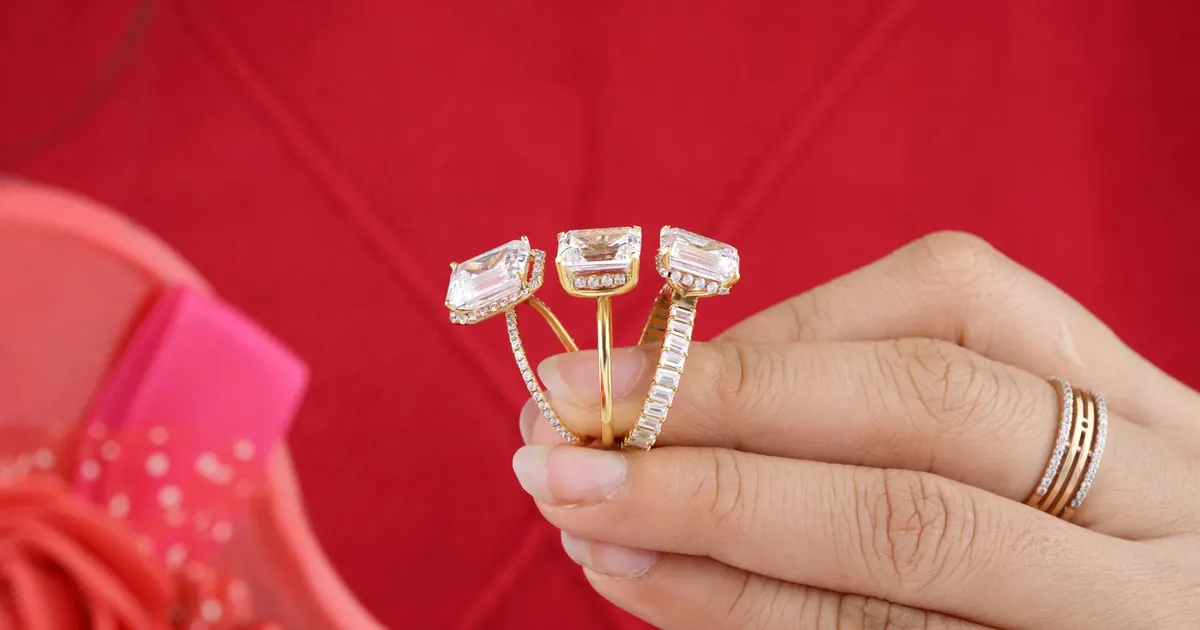
Photo: The Glorious Studio / Pexels
Why jewellery is a tricky thing to buy online
Jewellery is small, personal and often bought for an occasion. You cannot try it on in a shop, you cannot see how a chain sits on your collarbone, and the photos are lit to flatter. That does not mean you should not buy online — the choice is far wider than any high street counter, and you can look at a piece in your own mirror, in your own light, with your own clothes on. It just means doing a bit more homework before you click.
Start with the metal, not the design
The metal decides how the piece ages, whether it irritates your skin and whether it is worth buying at all. Design is the easy part. Metal is where people get caught out.
Gold, plated and filled
Solid gold is exactly what it says. Gold plated means a thin layer of gold over a base metal, usually brass or copper. It looks the part on day one but wears through with friction, sweat and perfume, and rings and bracelets go first. Gold filled sits in between: a thicker bonded layer of gold over a base metal, which lasts considerably longer than plating.
If a listing is vague about which of these it is, that is your answer. Move on.
Silver and the tarnish question
Sterling silver is the UK standard. It is a soft, bright metal that tarnishes — not a fault, just chemistry. It reacts to sulphur in the air, so it darkens faster in damp rooms, near wool, and on skin that runs acidic. It polishes up again easily enough. If you want something you never have to think about, silver is not it.
Steel, titanium and the everyday options
Stainless steel, titanium and tungsten are hard-wearing, straightforward to produce and unlikely to irritate sensitive skin. They are excellent for everyday rings and for anyone who reacts to base metals. They are also difficult to resize, so get the size right the first time.
The hallmark: your UK-specific safety net
This is where buying in the UK has a real advantage. Any item described as gold, silver, platinum or palladium and above a set weight must carry a hallmark struck by an assay office. That mark is a legal statement, not a marketing line.
A full hallmark includes the maker's or sponsor's mark, the assay office symbol, a fineness mark showing the purity, and a date letter. On silver you will often see the number for sterling purity stamped alongside. On very small or light pieces the hallmark may be partial or absent — the weight thresholds are low, but they do exist — so a missing mark is not automatically a red flag on a delicate chain.
What is a red flag: a listing that calls something gold when it means plated, or that shows no mark at all on a substantial piece. Plated and costume jewellery is not hallmarked and should not pretend to be.
If you are buying second-hand or from a marketplace seller, ask for a clear close-up of the mark. A seller who will not send one is telling you something.
Getting the size right
Rings
UK ring sizes are letters, not numbers, which trips up anyone used to American charts. The difference between one letter and the next is small — roughly the width of a thick piece of paper — so a half size genuinely matters. Measure the inside diameter of a ring that already fits, or wrap a strip of paper around your finger and mark where it meets. Measure at the end of the day, when fingers are at their largest, and measure the correct finger on the correct hand. Fingers are not symmetrical.
Wide bands fit tighter than thin ones. If you are between sizes and the band is chunky, go up.
Bracelets and bangles
Bracelet listings usually give a length. Bangles are sized by diameter, and getting one over your knuckles is the whole game. Measure your wrist snugly, then allow a little room for movement. A bangle that only just clears your hand will be uncomfortable all day.
Necklaces and chains
Chain lengths are given in centimetres or inches, and the gap between a choker and a princess length is bigger than most people expect. Measure a necklace you already like, laid flat, end to end, and use that as your benchmark. Check the clasp type too — a lobster claw is easy to fasten on your own; a box clasp on a fine chain is fiddly.
Stones and settings
Read what the stone actually is. Natural, lab-grown, cubic zirconia and glass are four different things, and a listing should say which. Lab-grown stones are real stones with the same composition as mined ones, simply made in a lab. There is nothing wrong with them, but they should not be sold as something else.
Look at the setting in the photos. Claw settings show off a stone but catch on knitwear. Bezel settings are smoother and more protective. For something worn daily, a lower, more enclosed setting snags less.
Reading the listing properly
- Look for the metal stated plainly, not buried under adjectives.
- Check whether the photos are the actual item or a stock image.
- Zoom in on the clasp, the jump rings and the joins. That is where inexpensive pieces fail.
- Read reviews for weight and scale. "Smaller than expected" is the most common complaint in jewellery.
- Check the returns policy before you buy, and note whether pierced earrings are excluded.
Returns and hygiene
Earrings are the awkward one. For hygiene reasons, many UK shops will not accept returns on pierced earrings once the packaging is opened, so treat them as final unless the listing says otherwise. For everything else, keep the box, the pouch and any tags until you are sure. Try pieces on over your clothes, in daylight, with the outfit you have in mind.
If something arrives damaged or is not what was described, you have rights as a UK shopper, and a polite message with photos is usually enough to sort it. Do not start by removing tags or wearing the piece out.
Making it last
Put jewellery on last and take it off first. Perfume, hairspray and sunscreen are the enemies. Do not wear it in the shower, the pool or the sea. Store pieces separately so they do not scratch each other, and keep silver in a tarnish-resistant pouch or a sealed bag with an anti-tarnish strip. A soft cloth is enough for routine cleaning; harsh dips can strip finishes.
The verdict
Buy jewellery online for the choice, but buy it on the metal, the mark and the measurements — not the photograph. Check the hallmark, know your UK letter size, read the returns policy, and accept that silver will tarnish and plating will wear. Do that, and the piece that arrives will be the piece you wanted.