Buying Furniture Online: What to Check Before You Click Buy
Furniture is the one purchase you can't judge from a thumbnail. Here's what to check — dimensions, materials, assembly and returns — before you hand over your card.

7 min read
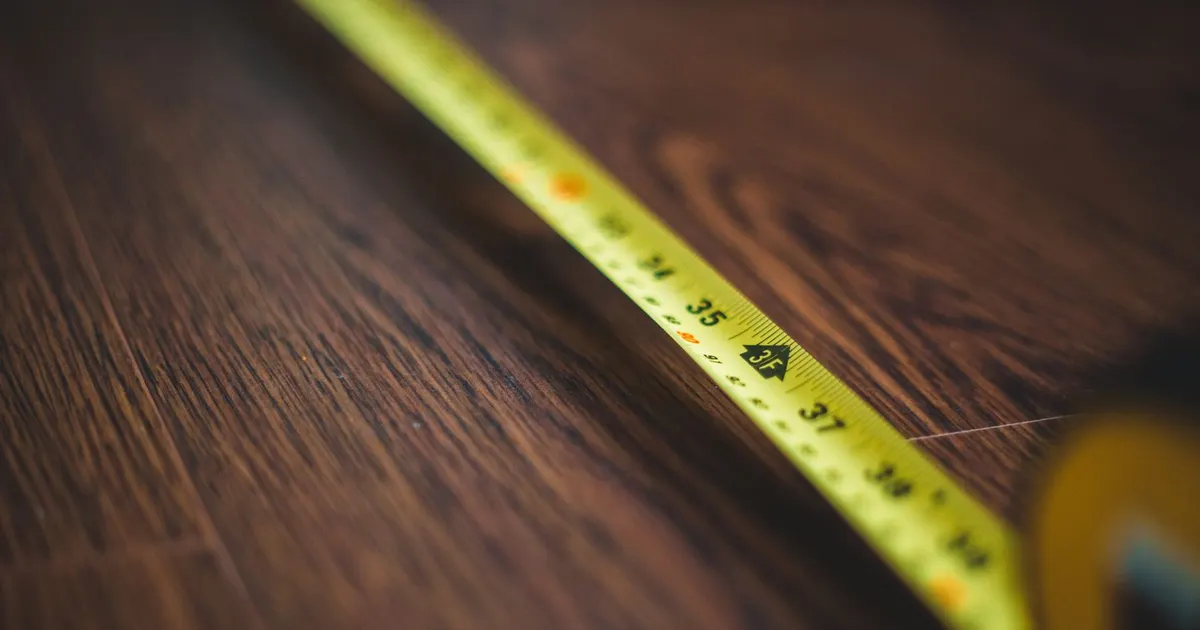
Photo: Erik Mclean / Pexels
Furniture is the one purchase you genuinely cannot judge from a thumbnail. A sofa photographed in a bright, empty studio looks generous. In your front room, next to the radiator, it can look like a shipping container that found a home.
The same goes for materials. "Oak" in a listing title can mean solid oak, oak veneer, or a colour called oak. None of those are necessarily bad — they're just very different things at very different levels of durability.
None of this is a reason to buy from a shop instead. It's a reason to spend ten minutes doing homework before you hand over your card. Here's what I check.
Measure the Room, the Route, and the Awkward Bits
Measure the space, then measure the space around it
Start with the footprint, but don't stop there. You also need to know how much room you want to walk past it, open drawers into it, or pull a chair out from it. A dining table that technically fits can still make a room unusable.
Height catches people out too. A tall wardrobe in a room with a sloped ceiling, a pendant light, or a low window head is a problem you can't fix with a bit of shoving.
The route in is where most returns begin
This is the step people skip, and it's the one that causes the most expensive mistakes. Measure the narrowest point between the front door and the spot where the thing is going: doorways, hallway bends, stair turns, lift doors, and the gap between the bannister and the wall.
For anything long and soft, remember it can be tipped on its end. The diagonal measurement often matters more than the width. And check whether the legs unscrew — that single detail has rescued more sofa deliveries than any other.
Think about the boring details
Where are the plug sockets? Does a door need to swing past it? Is it going near a radiator, a wood burner, or a window that gets direct sun all afternoon? Sun and heat will fade fabric and dry out timber, and no return policy covers "it faded".
Read the Materials Listing Like a Skeptic
Wood and wood-ish
- Solid wood means what it says, though a solid timber panel often has a veneered back for stability. That's normal engineering, not a con.
- Veneer is a thin layer of real wood over a stable core. Perfectly good on a tabletop; less good on a corner that gets knocked.
- MDF and particleboard are fine for painted or laminated pieces, but they don't like water and they don't like being re-screwed in the same hole twice.
- "Oak finish" describes a colour, not a species. If the listing is vague about the material, assume the cheaper option until told otherwise.
For upholstered pieces, look for the frame material. A hardwood frame is what you want. "Solid wood frame" without saying which wood is a softer promise than it sounds.
Upholstery and fillings
Check the fabric composition, whether the covers come off, and what's inside. Foam, feather, fibre and pocket-sprung seats all behave differently, and they age differently. A seat that's firm when new will soften; a seat that's soft when new will eventually sag.
If a shop offers fabric swatches, take them up on it. Screens and studio lighting both lie about colour, and a swatch in your own room, in your own light, is the only honest test.
Hardware and finishes
Drawer runners, hinges and fixings are where cheap furniture gives itself away. Metal finishes matter too: powder-coated survives far better than plated in a bathroom or a kitchen.
Photographs, Scale and Colour
Product photography is not dishonest, but it is heavily styled. Wide lenses make rooms look bigger and furniture look smaller. Low camera angles make everything look grander. Tiny props — a small plant, a slim lamp — make a piece look larger than it is.
So do this instead:
- Compare the listed dimensions against a piece you already own. Tape the outline on the floor if you're unsure.
- Look for a photo of the back, the underside, and the inside of any drawers. If there isn't one, that tells you something.
- Read the customer photos, not the studio shots. They're the closest thing to seeing it in person.
Assembly: What Actually Arrives
The flat-pack reality check
Find out how many boxes it comes in, roughly how heavy they are, and whether it arrives assembled at all. A large item in several boxes may not fit through the same gap as the finished piece, which is a genuinely annoying discovery to make on the pavement.
Tools, time and help
Most flat-pack builds need a screwdriver, an Allen key and patience. A drill helps. A second pair of hands is often non-negotiable, particularly for anything tall or anything with a door.
Build it on cardboard or a rug, keep the hardware bag and the instructions, and don't tighten every bolt fully until the whole thing is square. If you might move house, keep the fixings — a piece that comes apart is a piece you can take with you.
Returns, Delivery and the Boring Bits That Matter
Read the return policy before you read the reviews
This is the single most useful thing you can do. Specifically:
- Who pays to send it back, and who arranges collection for something heavy?
- Does it have to go back in the original packaging? For a sofa or a wardrobe, that's a serious question.
- Can an assembled item be returned, or does assembly void your ability to send it back?
- Are made-to-order or customised pieces excluded? They usually are.
- Are there collection or restocking charges?
- How long do you have, and does the clock start on order or on arrival?
Buying at a distance generally gives you stronger cancellation rights than buying in a shop, at least in the UK and Ireland. That protection has limits, and it doesn't work the same way in the US, where the seller's own policy does most of the work. So read the policy, not the assumption.
Delivery access and packaging
Check whether delivery is kerbside, to the front door, or to the room of your choice. For anything heavy, that difference is the whole job. Ask whether they'll take the packaging away with them — a wardrobe's worth of cardboard is a genuine problem in a small flat.
If something goes wrong
Photograph the packaging before you open it, and photograph any damage before you build. Keep the order confirmation and any messages with the seller. Report faults early and in writing, and be specific: what's wrong, when it appeared, and what you want done about it.
How to Read Reviews Properly
- Sort by most recent first, then read the critical ones. The one-star reviews tell you what breaks; the five-star ones tell you what people hoped for.
- Look for the same fault mentioned twice by different people. Once is bad luck. Twice is a pattern.
- Check the reviews are for the exact item and size you're buying. Shops often pool reviews across a whole range.
- Be wary of a wall of glowing reviews posted in the same short window.
- Customer photos beat customer prose every time.
Check the Shop, Not Just the Sofa
A few quick sanity checks before you commit:
- Is there a real trading address and a phone number you can actually reach?
- Do they have a showroom you could visit if it came to it?
- Is there a clear process for complaints, or just a contact form?
- Search the shop's name alongside the word "returns" and see what comes up.
A Pre-Purchase Checklist
- Measured the space, plus the walking room around it.
- Measured the route in, including the tightest turn.
- Checked the material, not just the colour name.
- Found the frame or core material for upholstered pieces.
- Compared the dimensions against something you already own.
- Looked at customer photos, not just studio shots.
- Read the return policy in full, including who pays.
- Confirmed assembly requirements and how many people it takes.
- Checked delivery access and packaging removal.
- Read the recent critical reviews.
- Checked the shop has a reachable human behind it.
- Saved the order confirmation somewhere you'll find it again.
The Bottom Line
Buying furniture online is worth it — the range is better, the choice is wider, and you can compare properly instead of traipsing around showrooms on a Saturday. But the risk sits almost entirely in the details nobody photographs: the doorway, the frame, the return policy, the number of boxes.
Do the measuring and the reading first, and the odds of a bad surprise drop enormously. Skip it, and you'll be the person trying to get a three-seater back into its original packaging at half past nine at night.