Plants for Dark Corners: What Actually Survives a North-Facing UK Room
Most houseplants that die in dim UK rooms are killed by the watering can, not the gloom. Here is how to read a north-facing room properly and pick plants that genuinely cope.

6 min read
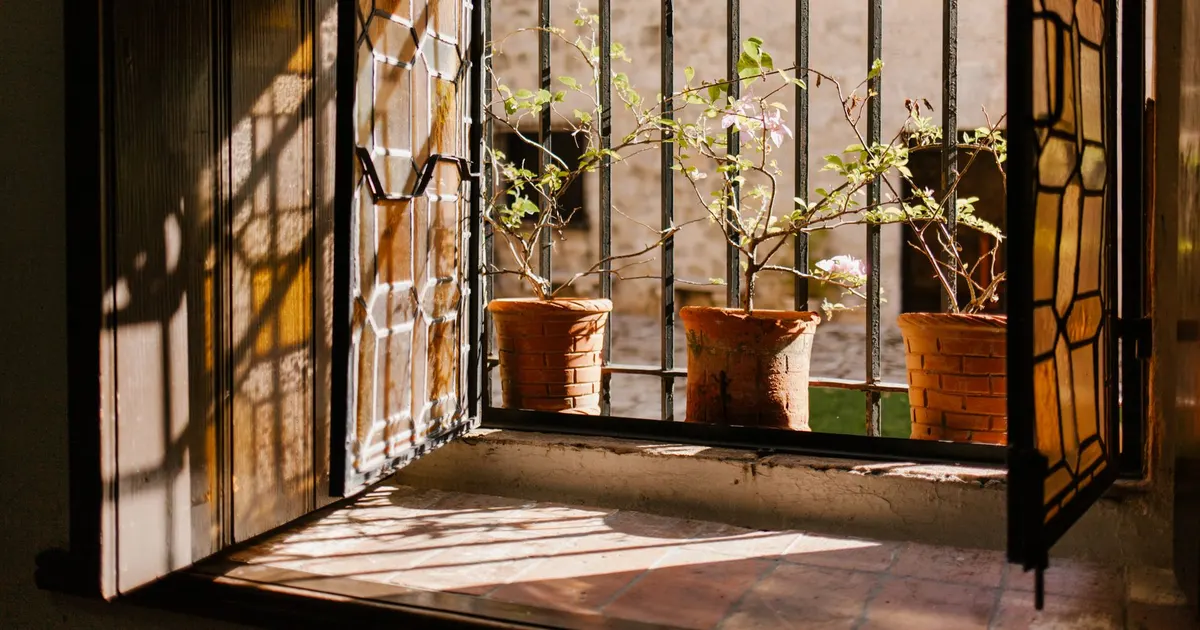
Photo: Julia Volk / Pexels
The corner where my sofa meets the wall has killed four plants. Not dramatically, just slowly, the way a Bristol January does: a leaf yellowing here, a stem going soft there, until one Sunday I am tipping a dead thing into the bin and wondering why the label promised it was easy.
Here is the thing I wish someone had told me years ago. In a dim room, light is rarely what kills the plant. Water is. Low light slows a plant's metabolism right down, so it drinks a fraction of what it would on a bright sill, and we carry on watering it as though it were still in a greenhouse. That mismatch, not the gloom, finishes most houseplants in this country.
So the whole job comes down to two moves: choose something that genuinely tolerates shade, then treat it like the slow, patient thing it has become.
Why so many UK rooms are darker than we think
British housing is not built for light. Victorian terraces have deep window reveals and narrow sash windows, interwar semis have small panes, and plenty of new-builds have generous glazing with a neighbouring block or a balcony slab in the way. Add net curtains, a blind half down for the telly, and a north or east aspect, and you have a room that feels perfectly bright to your eyes and is, by plant standards, a cave.
Your eyes are the problem. They adapt constantly, so a room at nine in the morning in November looks much like a room at two in the afternoon in June, and it absolutely is not. Plants do not adapt. They run at whatever rate the light allows.
Two other things quietly cut the light. The first is the season: in December, UK daylight is short and often flat grey, so a spot that works in May can be genuinely unsuitable in January. Most houseplants do not die in winter, they simply stop and wait. The second is the glass itself. Coated double glazing, plus a year of grime on the inside pane, takes a real slice off what gets through.
Reading a north-facing room properly
North-facing does not mean dark. It means no direct sun and steady, soft light all day. For a lot of foliage plants that is close to ideal: no scorching, no midday bake, no leaves crisping on a south sill in July.
What a north room does have is a hard drop-off. Light falls away fast as you move into the room.
Distance from the glass matters more than direction
Picture the light as a cone coming through the window. A plant on the sill gets the whole cone. A plant a metre back catches the edge of it. A plant in the far corner by the bookcase lives on whatever bounced off a wall.
A rough rule that has served me well: within a metre of a north window, most shade-tolerant foliage plants will be fine. Between one and two metres, only the toughest hold on. Beyond that you are asking a plant to live on fumes, and it will look like it.
Test the spot rather than guess
At around midday, hold your hand about 30cm above the place where the plant will sit. If you can see a soft but defined shadow of your hand, there is usable light. If the shadow is barely there, that spot is for a cast iron plant or for nothing at all. A light meter app on your phone gives you a number, which is most useful for comparing two spots in the same flat.
Worth knowing too: a hall with no window, a windowless bathroom and an internal landing are the three hardest places in a British home. Plants survive there. They rarely grow.
Plants that cope, and the ones that quietly give up
The reliable group is unglamorous and mostly grown for leaves rather than flowers. That is the trade. Flowers need energy, and energy comes from light.
- Snake plant: upright, architectural, and about as forgiving of neglect as anything sold here.
- ZZ plant: glossy leaves and thick roots that store water, so it copes with a fair distance from the window.
- Devil's ivy and heartleaf philodendron: trailing, easy to replace, and fairly honest about when they are unhappy.
- Cast iron plant: the one for genuinely grim corners. Slow, but it stays alive.
- Spider plant: fine in moderate shade, and it tells you loudly when it wants a drink.
- Peace lily and Chinese evergreen: decent in soft light, though peace lilies sulk visibly when thirsty.
Likely to struggle: anything sold as a flowering houseplant, most succulents and cacti, ferns that want humidity and light at the same time, and anything with bold variegation.
The variegation trap
This catches people out constantly. A variegated leaf has less chlorophyll than a plain green one, so the plant needs more light, not less, to run the same engine. Buy a variegated form for a dark corner and it will slowly push out plainer and plainer leaves, or simply stall. If the corner is dim, choose the plain green version.
Positioning and care in a dim room
In low light, the single most useful change is to stop watering to a schedule. Lift the pot instead: a dry pot is noticeably light, which is a better signal than the top of the compost. Push a finger in to the second knuckle, and if it feels cool and damp, walk away. In winter most of these plants want water rarely, and some go weeks without. Never leave a plant sitting in water in a saucer, because root rot in a dim room is quick and quiet. And if a plant has sat in the same pot for years, barely growing, do not repot it into something much bigger: a large pot of wet compost around a small root ball is a death sentence in low light.
A few small habits do more than any fertiliser:
- Wipe the leaves every few weeks. Dust is cosmetic on a bright sill, but in a dim room it costs you light you cannot spare.
- Turn the pot a quarter turn weekly so it does not lean permanently towards the glass.
- Keep plants away from radiators and draughty doors. Cold glass in January plus warm, dry air is a rough combination.
- Check leaf undersides when you buy. Warm, dry, dim conditions suit spider mites, and they will find your other plants.
- Move plants closer to the window from November to February. A foot nearer the glass makes a visible difference by spring.
Then there is the limit nobody likes. If a room is genuinely dark, you are choosing between a plant that survives and a lamp. No clever trick turns a dark hallway into a conservatory.
Do one thing today. Take your dimmest corner, run the hand-shadow test at midday, and shift whatever lives there a step closer to the window. Then leave the watering can alone for a fortnight and watch what happens.