Fermenting at Home in the UK: What to Buy Online and How to Start
Fermenting needs less kit than the shops would have you believe. Here's what's worth buying online, how much salt to use, and where to keep jars in a cool British kitchen.

6 min read
Why fermenting suits a British kitchen
Cabbage in January, a glut of courgettes in August, carrots going bendy in the drawer. Fermenting turns all of that into something you'll actually eat, and it needs almost nothing: salt, a jar, and a cool corner.
It also suits our climate better than most food projects. You don't need warmth, you don't need a proving drawer, and you don't need to babysit it. A cool British kitchen is genuinely an advantage — it just means things take a bit longer than the recipes suggest.
The catch is the shopping. Search for fermenting kit online and you'll be offered a lot of expensive equipment you don't need, plus salt that actively works against you. Here's how to buy the small number of things that matter.
What you actually need — and what you don't
You need: a jar, non-iodised salt, vegetables, a digital scale, and a cool spot.
You don't need: a twelve-piece starter kit, a ceramic crock, a temperature-controlled cabinet, or a special spoon. All of those are nice later, once you know you'll stick with it.
The four ferments worth starting with
Sauerkraut
Shredded cabbage and salt. That's it. Weigh your shredded cabbage, add salt at roughly two per cent of that weight, massage until it goes limp and releases brine, then pack it tightly into a jar so the liquid covers the solids.
Salt-brined vegetables
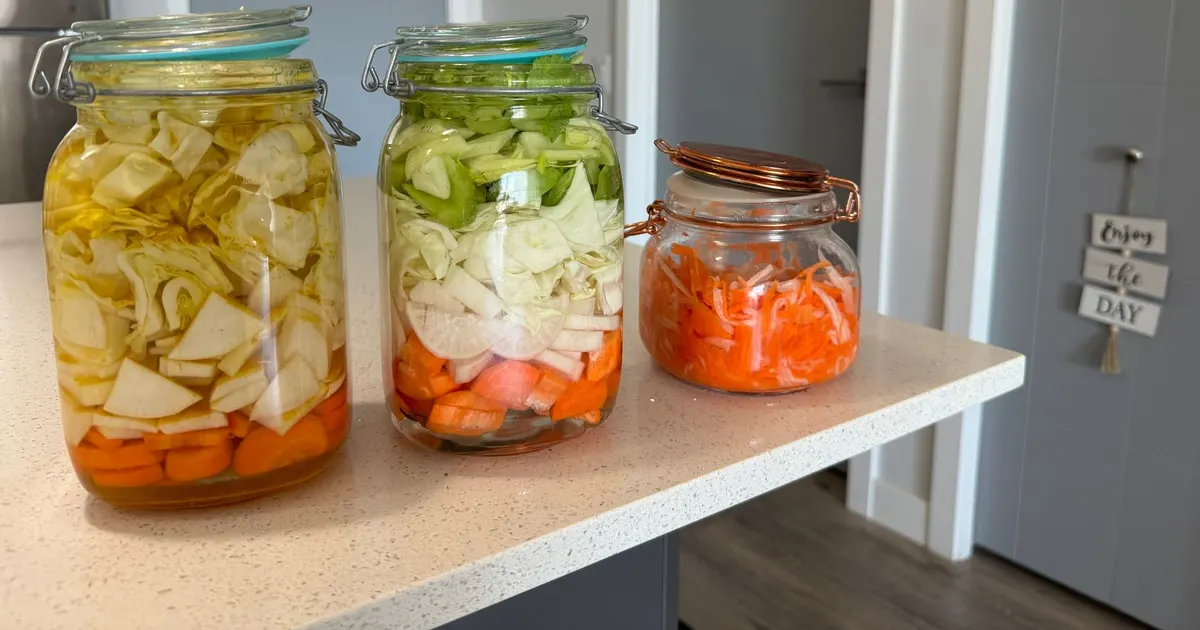
Carrots, green beans, cauliflower, radishes, beetroot, turnips. A brine of about two to three per cent salt by weight of water. Faster than kraut — often a week or so — and a good way to use up a veg box.
Kimchi
Napa cabbage is traditional, but a British-grown hispi or sweetheart cabbage works well and is cheaper. You'll need gochugaru (Korean chilli flakes), garlic, ginger, a little sugar, and either fish sauce or a vegan substitute. It can be eaten fresh within a day or left to sour for a fortnight.
Kombucha and water kefir
These need a starter culture and sugar, plus more attention and more kit. Perfectly doable, but leave them until you've run a few vegetable ferments and know how your kitchen behaves.
Buying the kit online
Jars
Wide-mouth glass jars with straight sides. Clip-top jars work well; screw-top jars work if you remember to burp them. Avoid narrow-necked bottles for anything shredded, and check the rim for chips before you use it.
Weights and followers
Glass weights, ceramic followers, or a small zip bag filled with brine. The job is simply to hold everything under the liquid. A whole cabbage leaf tucked on top, under the weight, helps keep stray shreds down.
Lids and airlocks
An airlock lid lets gas escape without letting air in. Not essential, but it noticeably reduces surface yeast and the smell in a small kitchen. Silicone lids with a one-way valve are the simplest version.
Salt
Non-iodised, with no anti-caking agents. Sea salt, flaky salt or pickling salt all work. Iodised table salt can inhibit fermentation and tastes harsh, and anti-caking agents leave a cloudy brine.
A digital scale
This is the one purchase that genuinely matters. You're working by weight, not by eye, and a scale that reads single grams costs very little. Buy it before anything else.
Starter cultures
For kombucha, kefir and some kimchi recipes. Look for a seller who explains how the culture was maintained and how it's packed for posting, rather than one who just lists a name.
Reading a fermenting listing properly
- "Fermentation kit" means nothing specific. Check the contents list: a jar and a lid is not the same as a jar, weight, airlock and pounder.
- Glass and glaze. Food-grade glass, and lead-free glaze on any ceramic weight.
- Spare parts. Airlock gaskets perish. If replacements aren't sold, the lid is disposable.
- Salt ingredients. Look for iodine and anti-caking agents in the small print.
- Chilli flakes. Gochugaru is coarse and bright red; generic chilli powder is a different product entirely.
- Skip anything promising a fixed number of days. Fermentation depends on temperature, not the calendar.
Temperature: the real British constraint
British homes often sit around 16–20°C in winter, and that's fine — just slower. A kraut that takes a fortnight in a warm kitchen may take a month in a chilly one, and it will taste better for it.
- 18–22°C is the sweet spot for most vegetable ferments.
- Below about 15°C things slow to a crawl and vegetables can soften before they sour.
- Above about 25°C everything moves fast and can go yeasty and limp.
Find a spot away from the radiator, the oven and direct sun. A cupboard, a cool corner, or a garage in summer all work. An airing cupboard only if it genuinely isn't warm.
Seasonally, spring and autumn are the easiest times to start, because indoor temperatures are steady. In a July heatwave, move jars to the coolest place in the house, or use the fridge for a very slow ferment. In a cold snap, expect to wait and check less often.
Mould, kahm yeast, and when to bin it
Kahm yeast is a flat, white, powdery film on the surface. It's harmless, if slightly bitter. Skim it off, make sure everything is submerged, and carry on.
Mould is fuzzy and coloured — green, blue, black, pink — and often patchy. On a brine ferment some people skim the surface and continue, but if it's fuzzy and coloured, bin the lot. Don't taste it to check.
Bin it without hesitation if you see soft or slimy vegetables, pink discolouration, or a smell of rot. A healthy ferment smells sour, salty and faintly fizzy. It should never smell like a bin.
Cleaning, storing and eating
- Wash jars and weights in hot soapy water and let them air-dry. You don't need to sterilise for a salt ferment, but everything should be properly clean.
- Once it tastes right, move the jar to the fridge. Cold slows fermentation to almost nothing.
- Keep the contents under the brine. That's the protection.
- Use a clean fork each time. Don't double-dip.
- A jar of kraut keeps for months in the fridge and will keep sharpening.
- Use the brine: salad dressings, marinades, a splash in a stew, or a bloody mary.
Where to buy what
Supermarkets cover cabbage, carrots and basic salt. Online is better for the specific things: airlock lids, glass weights, gochugaru, non-iodised salt in larger bags, and starter cultures. Buy the small items first — a jar, a weight, a lid, a scale — and add as you go.
A sensible starter basket
- One digital kitchen scale that reads single grams
- Non-iodised salt, no anti-caking agents
- Two or three wide-mouth glass jars
- Two glass weights or ceramic followers
- One airlock lid, if you like the idea of less fuss
- Gochugaru, if kimchi is the plan
- Nothing else until you've made a batch
The short checklist
Buy the scale before the kit. Use non-iodised salt and work by weight. Keep everything under the brine, in a steady spot around 18–22°C, and accept that a British winter will slow things down. Skim kahm yeast, bin mould, and trust your nose over any recipe's timeline.
Do that and a cabbage becomes four jars of something far better than anything you'd buy in a plastic tub.