Home and Garden Holiday Prep: A Budget Guide for UK Travellers
You've booked the trip. The bit that catches people out is everything you leave behind — the garden, the house, and the cover you're travelling on. Here's how to sort all three without overspending.

6 min read

The bit nobody plans for
You've booked the trip. Flights, suitcase, the lot. Then you look out of the kitchen window at a fortnight's worth of tomatoes and a hanging basket that's already drooping.
Leaving a UK home and garden for a week or three is a small logistics job. Done badly, you come back to dead bedding plants, a fridge that smells, and a nagging worry about whether the house was covered while it sat empty. Done well, it takes an afternoon and costs very little.
Here's how to sort the garden, the house and the travel cover without overspending on any of them.
Sort the garden first — it won't wait for you
Plants don't care about your departure date. The good news is that most of the work is a one-off tidy-up rather than a daily commitment.
Watering, without asking too much of a neighbour
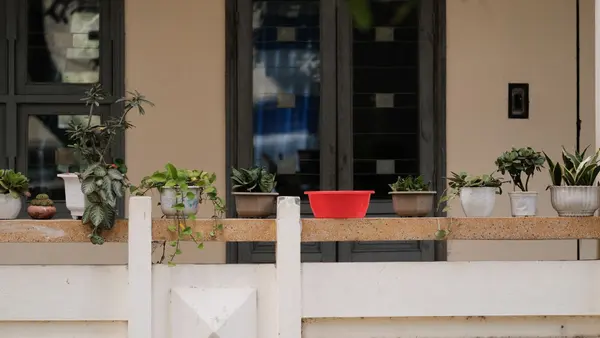
Move every pot and container into shade and group them together. Clustered pots shade each other and lose far less moisture than a row of singles in full sun. A layer of mulch on borders and pots slows evaporation more than most people expect.
Water everything thoroughly the day before you go, not the morning of. Deep watering sinks in; a quick splash just wets the surface and evaporates.
If you're asking a neighbour to help, make it easy for them. Leave a filled can by the door, group the pots where they can be reached in one go, and don't hand them a forty-pot obstacle course. One favour is easier to ask than thirty.
The lawn
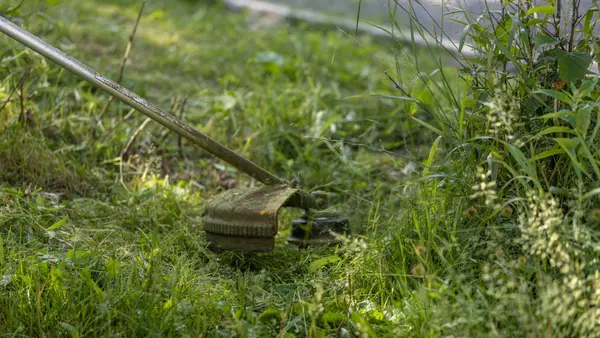
Cut it slightly longer than usual before you leave. Short, scalped grass browns off quickly in a dry spell, and longer blades shade the soil underneath. If a heatwave is forecast, leave it alone entirely — a scruffy lawn recovers, a scorched one takes much longer.
Greenhouse, veg and hanging baskets
Open the greenhouse vents before you go, and shade the glass if you're away in high summer. A sealed greenhouse in July is an oven.
Pick everything that's ready — courgettes, beans, tomatoes, salad — and give it away rather than leaving it to rot on the plant. Rotting fruit invites pests. Bring hanging baskets down and group them in shade rather than leaving them swinging in full sun.
Lock the house down properly
Fridge, bins and the giveaway signs
Eat down the fridge in the week before you go, or freeze what's left. Empty the bins. If bin day falls while you're away, arrange for someone to put them out and bring them back in — a wheelie bin at the kerb for ten days is a fairly loud announcement that nobody's home.
Post, timers and heating
A pile of post behind the glass is the other classic signal. A redirect or a keepsafe service costs little and removes the problem entirely. If you'd rather not pay, ask a neighbour to take it in — but be honest about how long you're away.
Plug-in timers on a couple of lamps and a radio do more for the look of an occupied house than anything else, and they cost very little. Vary the times slightly.
In winter, leave the heating on a low background setting rather than switching it off completely. A burst pipe is one of the most expensive things that can happen to an empty house, and frost is the usual culprit. In summer, there's no need.
If you're away for a long stretch, turning the water off at the stopcock is worth doing — but find it and test it before the morning you leave, not at the airport.
One more thing: check how long your home cover allows the house to sit empty. Most policies have a limit, and it's better to know before you go than afterwards.
Travel cover: where people either overspend or under-insure
Travel insurance is where the budget-minded shopper can go wrong in both directions. Buy the cheapest thing on the screen and you may find the gap when you need it most. Buy every add-on going and you've paid for winter sports cover you'll never use.
Match the policy to the trip you're actually taking
Think about the shape of your year, not just this one trip. If you've got two or three trips lined up, annual cover usually works out better than buying separately each time. If it's one fortnight in Europe and nothing else, single trip is the straightforward choice.
Then match the cover level to what you're doing. A city break, a cruise, a ski trip and a long stay with family all need different things. At Staysure, cover levels run from Basic through Comprehensive to Signature, with separate policies for single trip, annual, long stay, cruise, ski and winter sports, family, group, Europe, worldwide and expat travel. Picking the one that fits is the whole trick.
Declare the boring stuff
Declare pre-existing medical conditions. It feels like an admin chore, and it's the single most common way people accidentally void their own cover. Cover is available for all ages and for many pre-existing conditions, so the conversation is usually less painful than people fear.
Check what you already have
Some current accounts and credit cards bundle travel cover. Read what's actually included before you buy a second policy, particularly around medical cover. If the bundled version is thin, a proper policy is the better spend.
What good travel cover looks like
Staysure is a UK travel insurance provider built around the things that trip people up: age and medical history. It offers single trip, annual, long stay, cruise, ski and winter sports, family, group, Europe, worldwide and expat cover, and it covers all ages and many pre-existing conditions.
Comprehensive and Signature policies include unlimited medical cover and emergency expenses, and there's 24/7 emergency assistance with an emergency helpline. There's also a Travel Doctor service with English-speaking doctors — the sort of thing you only appreciate when you're unwell abroad and struggling with the language.
It's been named Best Company for Travel Insurance at the British Travel Awards every year from 2016 to 2025, and it holds an Excellent rating of 4.7 from 553,954 reviews. That's a lot of people who've actually claimed or dealt with them.
Keeping the cover bill down without cutting corners
- Buy early. Leaving it to the airport is the most expensive way to buy anything.
- Go annual if you travel more than once. Two trips a year is usually the tipping point.
- Use family or group cover if your household travels together.
- Skip add-ons you won't use. Winter sports cover on a beach holiday is wasted money.
- Don't double up with a bank account policy unless you've read it properly first.
- Declare everything. A refused claim is the biggest overspend there is.
The night-before checklist
- Pots grouped in shade and watered deeply
- Lawn left a little longer than usual
- Greenhouse vents open
- Fridge emptied and bins sorted for collection
- Post redirected or a neighbour asked
- Timers set; heating on a background setting if it's cold
- Stopcock found and tested
- Policy documents saved offline on your phone
- Emergency assistance number written down, not just saved in an app
The verdict
Sorting the garden and the house before you go is a couple of hours' work and a bit of forethought. The travel cover is the part worth real attention — not necessarily real money. Match the policy to the trip you're actually taking, declare what needs declaring, and treat a provider that covers all ages and pre-existing conditions as your benchmark. Then go and enjoy the holiday.
Some links on this page are affiliate links. If you buy through them we may earn a commission at no extra cost to you. Affiliate disclosure