How to Buy Fresh Food Online: A Guide to Quality and Delivery
Ordering fresh food online is a gamble unless you know what to look for. Here's how to judge a store, read a listing, and store what arrives so nothing goes to waste.

6 min read
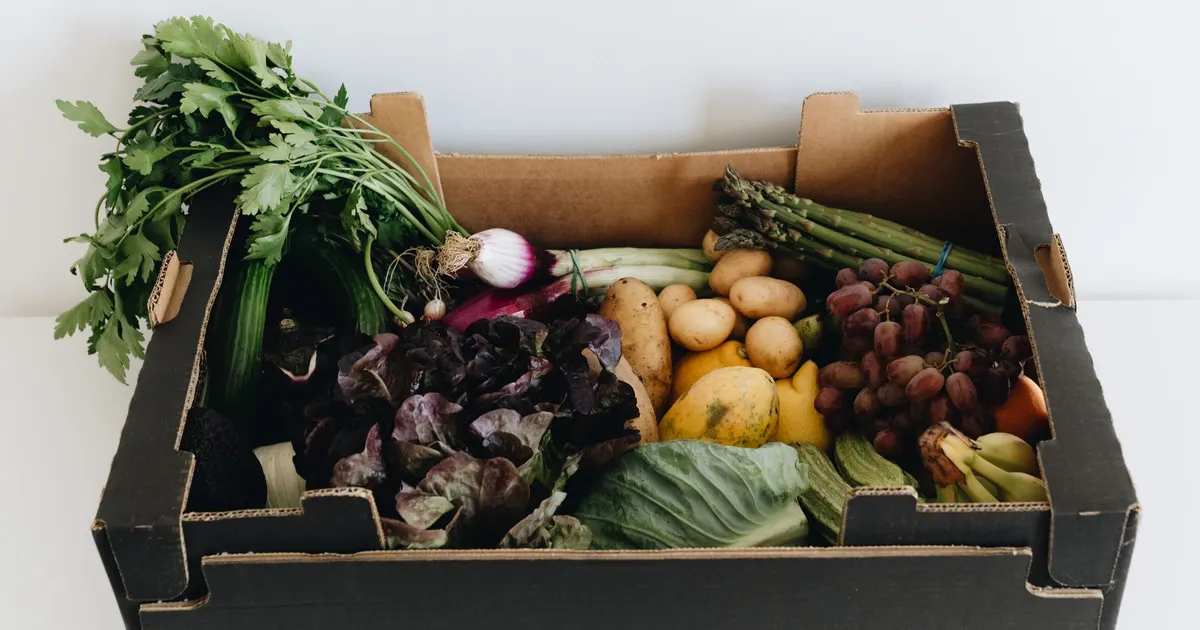
Fresh food is the hardest category to buy online. You can't squeeze the avocado through a screen, and you can't smell the fish. The good news is that most of the risk is manageable once you know what to look at — in the listing, in the delivery options, and in how you handle the box when it lands.
Decide what you actually need delivered
Not everything belongs in an online grocery order. Sorting your list by risk makes the whole thing easier.
- Low risk: root vegetables, onions, potatoes, squash, apples, citrus, cabbage, hard cheese. These travel well and rarely disappoint.
- Medium risk: tomatoes, peppers, mushrooms, leafy greens, dairy. Usually fine if the cold chain is good.
- High risk: soft berries, fresh herbs, delicate salad leaves, stone fruit in peak season. Order these only if you'll eat them within a day or two.
- Meat and fish: fine to order, but schedule them for a day you'll actually cook them.
- Bread: only worth it if it's baked the same day it ships. Otherwise, buy it locally.
Build your basket around two or three planned meals rather than a vague restock. It's far easier to judge whether a store did well when you know exactly what you intended to cook.
Judging a store before you spend anything
Range is a better signal than design
A store with a narrow range that shifts with the seasons is usually closer to its supply than one that lists everything, all year round. If asparagus appears in winter and vanishes in June, that catalogue was probably written by someone who actually buys food. A permanent, unchanging list of "fresh" items is worth a second look.
Cold chain and packaging
Read how the store talks about refrigeration and packing. Vague reassurances are a warning sign. Specific detail — insulated liners, ice packs, raw meat bagged separately from everything else — tells you someone has thought about the journey, not just the checkout page.
The substitution policy
Ask yourself what happens when something is out of stock. Stores that let you mark an item as not to be substituted, or pick a backup, are much easier to deal with than those that send whatever is nearest. This matters most with fresh produce, where a substitution can be a completely different vegetable.
Reviews, read the right way
Ignore the star average; it's mostly noise. Read the reviews that mention a specific item and a specific problem. "The strawberries were soft on arrival" tells you something useful. "Terrible service" tells you nothing at all. Look for patterns across several reviews rather than one angry outlier.
How to read a product listing
Seasonality beats photography
Product photos are styled and often years old. Seasonality is much harder to fake. If the store flags what's currently at its best, that's a genuine signal about how the range is managed. Buy into the season and you'll get better food for less effort.
Weight versus piece
Some items are sold by weight and some by count, and the difference matters. A bag of potatoes sold by weight will vary slightly between orders; three peppers sold by count won't. Neither is wrong, but knowing which you're buying stops the surprise when a box feels lighter than expected.
Origin and method
For meat, dairy, and eggs, the description should tell you where the product came from and how it was raised. If that information isn't there, assume it isn't a priority for the store. For produce, origin matters less than freshness, but a named region is usually a sign of a shorter supply chain.
Choosing a delivery option
Attended versus unattended
An attended delivery — where you're home to receive it — is always better for fresh food. You can check the order immediately, get cold items into the fridge, and flag problems while the driver is still there. Unattended drop-offs work if you have a shaded, secure spot and the store uses proper insulation, but they're a compromise in warm weather.
Slot length and order deadlines
Wider delivery windows are usually cheaper and easier to book; narrow ones cost more and disappear faster. Pick based on your day, not on saving a little. A box sitting on a doorstep for an extra hour undoes a lot of good work.
Packaging you'll have to deal with
Insulated liners, gel packs, and bulky boxes all have to go somewhere. Check whether the store takes its packaging back or uses recyclable materials. It's a small thing that becomes irritating every single week.
When the order arrives: a two-minute check
Do this before the driver leaves if you can, and immediately after if you can't.
- Cold items first. Press a hand against chilled and frozen goods. They should feel genuinely cold, not cool.
- Check meat and fish separately. Look for intact seals, no leaks, and no discolouration.
- Inspect soft produce. Berries, herbs, and leaves are where problems show up first.
- Check dates on dairy and bread. You want usable time, not the last day.
- Photograph anything wrong. A clear photo makes a refund or credit straightforward, and most stores ask for one anyway.
Storing what you bought
Good storage is where most of the value is won or lost.
Use your fridge zones properly
- Coldest area (usually the back and bottom): raw meat, fish, dairy.
- Middle shelves: cooked food, leftovers, ready-to-eat items.
- Door: condiments and drinks only — it's the warmest spot and the most temperature-variable.
- Salad drawer: vegetables that like humidity, such as carrots, peppers, and leafy greens.
Keep these apart
Some produce speeds up ripening in everything nearby. Apples, bananas, pears, and avocados release ethylene gas, so keep them away from leafy greens, broccoli, and cucumbers. Onions and potatoes should never be stored together — each makes the other spoil faster.
Freeze with a plan
If you've over-ordered, freeze with intention. Portion meat before freezing rather than freezing a large joint whole. Blanch green vegetables briefly, cool them, and freeze flat in bags. Bread freezes well sliced. Label everything with the date; a freezer full of unmarked containers is just delayed waste.
Cutting waste without cutting quality
- Plan two or three meals around what's arriving, and cook the most perishable items first.
- Wash and dry salad leaves, then store them with a piece of kitchen paper to absorb moisture.
- Herbs keep longer with their stems in a glass of water, loosely covered.
- If you regularly throw away the same item, stop ordering it. That's a habit problem, not a store problem.
- A weekly order beats a daily one: fewer deliveries, less packaging, and a clearer picture of what you actually eat.
A first-order checklist
- Start small — a mid-sized order tells you more than a full shop.
- Include a mix of low-risk staples and one or two high-risk items so you can test both.
- Choose an attended delivery for your first order.
- Check everything on arrival and note any problems.
- Reorder the same items next time. Consistency is the real test of a fresh food store.
The bottom line
Buying fresh food online works when you treat it as a supply question rather than a shopping question. Check the cold chain, read listings for seasonality rather than styling, take the attended delivery slot, and store what arrives with a bit of care. Do that and the gap between an online order and a trip to the market narrows considerably — and on a busy week, it disappears entirely.