Buying Tea Online in the UK: Leaves, Bags and What Really Decides the Cup
Two things decide whether the tea you order through the post tastes brilliant or like warm nothing: how fresh it is, and what comes out of your tap. Here's how to buy well and brew it properly at home.

10 min read
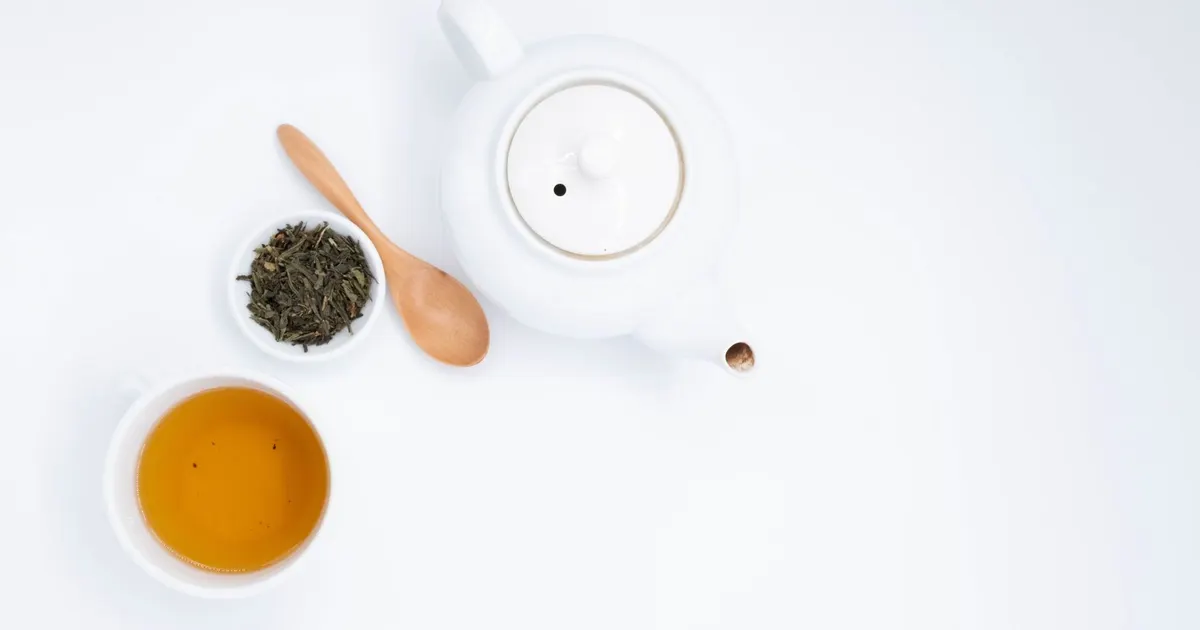
You boil the kettle, pour it over the leaves, wait, and the cup tastes of warm nothing: faintly dusty, oddly flat, with a bitterness that arrives late and stays. The tea came through the post a fortnight ago in a handsome packet. The cheap bag at the back of the office cupboard still makes a better drink.
That gap is rarely the leaf's fault. After years of ordering tea online and brewing it in a hard water city, I've come to believe that buying tea by post is decided by two things no product photo can show you: how long the tea has been sitting in a warehouse, and what comes out of your tap. Nail those and a modest everyday blend tastes lovely. Miss them and the most expensive first flush in the shop will let you down.
Everything below hangs off that thought.
Why bother buying tea online in the UK
Supermarkets are built for one kind of tea. Strong and malty, built for a splash of milk, in a bag, at a price that makes it an afterthought in the weekly shop. That isn't a criticism. It's just a narrow slice of what the plant can do.
Buy online and the shelf gets much longer. Single estate Assams, Darjeelings from different flushes, Japanese greens, Taiwanese oolongs, aged dark teas, smoked lapsang, and blends put together by people who taste them for a living. The practical wins are quieter than the marketing suggests. You can buy by harvest rather than by brand, you can reorder the exact thing you liked months later, and you can start with small amounts to work out what suits your water before committing to a big bag.
What you give up is your nose. In a shop you can open a tin, breathe it in and know in two seconds whether you want it. Online you are reading, comparing and trusting. That's the trade, and it explains why reviews of the same tea can be so wildly contradictory.
Here's the bit people miss. The UK's water is a postcode lottery. London, the South East and East Anglia sit on chalk and produce hard water full of dissolved minerals. Scotland, Wales, Devon, Cornwall and much of the North West get soft water that lathers easily and tastes almost sweet. The same leaf brewed in Glasgow and in Croydon gives you two different drinks, and neither reviewer is lying.
There's a seasonal rhythm to it as well. A cold snap in February wants a thick Assam with milk. The first properly warm week in May is when I start cold brewing green tea in the fridge overnight. Ordering online makes that switch easier, because you aren't limited to whatever the local shop happens to stock.
The main types of tea, without the mythology
Every true tea comes from the same plant, Camellia sinensis. What changes is how the leaves are treated after picking, and the biggest variable is oxidation: how much the leaf is allowed to darken before the process is stopped with heat.
Black tea, the one we actually drink
Fully oxidised, robust, forgiving. Assam is malty and thick, the backbone of most breakfast blends. Ceylon is brighter and cleaner. Darjeeling is lighter and more floral, and genuinely different depending on whether it's a first flush (spring, brisk, almost green) or a second flush (summer, rounder, muscatel). Kenyan teas are brisk and make excellent everyday cups. If you take milk, this is your family.
Green and white, where temperature matters
Green tea is barely oxidised, so it keeps a fresh and grassy character, sometimes almost marine. It's also the most sensitive to how you brew it: boiling water turns it bitter in seconds. White tea is the least processed of all, usually just withered and dried, and it rewards a gentler pour.
Oolong and dark teas, where it gets interesting
Oolong sits between green and black, partly oxidised, and covers a huge range from light and creamy to dark and roasted. Dark teas, including pu'er, are fermented and often aged, which gives them an earthy, almost cellar-like depth. These are the teas that turn a casual drinker into someone with opinions.
Herbal isn't tea, and that's fine
Peppermint, chamomile, rooibos and the rest contain no Camellia sinensis at all. They're infusions, sold alongside tea because the brewing kit is the same. Worth knowing when you're comparing listings, because you aren't comparing like with like.
Loose leaf, teabags and pyramids: pick the tool, not the status
This is where most online tea arguments start, and most of them miss the point. The format isn't a measure of quality. It's a measure of what you're asking the tea to do.
What's actually inside a teabag
A standard paper bag usually holds fannings or dust: tiny broken pieces left over from processing whole leaves. That sounds damning, and tea snobs treat it that way, but there's a reason it exists. Small pieces release flavour fast and consistently, which is exactly what you want at half six in the morning when the kettle is on and you haven't spoken to anyone yet.
Pyramids and the middle ground
Pyramid bags are bigger and roomier, so they can hold larger pieces of leaf that need space to unfurl. In practice they give you more of the character of loose leaf with the tidiness of a bag. If you want one upgrade that changes your everyday cup without changing your routine, this is it.
Loose leaf, and the faff question
Loose leaf gives you control: leaf quantity, water temperature, steeping time, and often several infusions from the same leaves. It's usually better value per cup, though that isn't why I buy it. I buy it because I can adjust. The cost is a pot, a strainer or an infuser, and about forty seconds of extra thought.
A short guide to choosing:
- If you drink tea in a rush, with milk, before you're properly awake: a good paper bag or pyramid is the right answer, not a compromise.
- If you drink tea slowly at a desk or after dinner: loose leaf in an infuser earns its keep.
- If you want to taste what a specific estate or harvest is like: loose leaf, small quantity, brewed plain first.
How to judge quality when you can't smell it
You can't sniff the tea through a screen, so you need stand-ins for your nose. These are the ones I trust.
Packing dates beat best before dates
A best before date on tea is often set generously, sometimes years ahead, and tells you almost nothing. What you want is a packing date or a harvest season. Tea isn't dangerous when it's old, it just goes flat and papery, and no amount of brewing skill brings it back. If a listing won't tell you when the tea was packed, that's information in itself.
Read the leaf description, not the poetry
Ignore the tasting notes for a moment and look for words about the leaf itself: whole leaf, broken, tippy, hand picked, single estate, blended. Whole leaf tends to give a cleaner, more layered cup. Broken leaf gives a stronger, faster brew. Neither is better; they do different jobs.
Buy small, then buy big
The most common mistake I see, and the one I made for years, is ordering a large bag of something unfamiliar because the packaging looked good. Buy the smallest size first. Brew it three ways: plain, with milk, and with a shorter steep. Then commit. It's the cheapest way to learn what you actually like.
Reviews worth reading
Skip the ones that only mention how quickly the parcel turned up. Look for reviews that talk about water, brewing time, or how the tea compares to something else the person has tried. Those are the people who can tell you whether it will work in your kitchen.
Also worth weighing: blends versus single estate. A blend is designed to taste the same year after year, which is a feature if you drink it daily. A single estate changes with the weather, which is a feature if you enjoy that. Neither is a trap, but they're different promises.
Brewing for UK water, which is the real variable
If you take one thing from this piece, take this: your water is an ingredient, and in much of the UK it's the loudest one in the cup.
Hard water, soft water and what they do
Hard water carries dissolved calcium and magnesium. It mutes delicate flavours, makes some teas taste chalky, and reacts with the compounds in black tea to leave that oily film on the surface. Soft water does the opposite: it lifts flavours, sometimes to the point where a strong tea tastes almost sharp. If your tea tastes dull and you live in a hard water area, the tea may be perfectly fine.
A water filter jug makes a real difference, and it's the cheapest change most people can make. If your water is very soft and your tea tastes thin or metallic, a tiny pinch of bicarbonate of soda in the brewing water rounds it out.
The kettle rules
- Draw fresh water from the cold tap each time. Water that's been sitting in the kettle overnight tastes stale.
- Don't reboil. Repeated boiling drives off dissolved oxygen, and a flat cup is the result. It's the reason the second cup from the same kettleful so often disappoints.
- Descale. Limescale in the kettle ends up in the cup, and in hard water areas that happens faster than you'd think.
Temperature without a thermometer
Black tea wants water just off the boil. Green and white want it noticeably cooler, and oolong somewhere between. You don't need a gadget. Boil the kettle, then pour the water into a cold mug or jug and let it stand while you get the leaves out. By the time you pour it over the tea, it's in the right zone. If your green tea tastes bitter, this is almost always the fix.
Milk, and the milk first myth
Milk softens tannins, which is why it works so well with a strong Assam. Adding it first or last makes very little difference to the taste in a modern mug; the old rule came from delicate china and the risk of cracking it with hot tea. Do whichever you prefer. What does matter is not squeezing the bag against the side of the mug if you dislike bitterness, because that pushes out tannins you'd rather leave behind.
The two cup test
Brew two cups of the same tea side by side. One with freshly drawn, filtered water poured just off the boil. One with water that's been boiled twice from a scaled kettle. Taste them together. I've done this with people who were convinced they didn't like a particular tea, and the second cup is usually the one they were remembering.
Storing tea at home without ruining it
Tea is a dried leaf, and dried leaves are greedy. They take on whatever is around them, which is why a bag left open next to the spice rack tastes of cumin by March.
The five enemies
Light, air, heat, moisture and strong smells. That's the whole list. Everything below is just a way of keeping those five away from your tea.
Where not to keep it
Not in a glass jar on a sunny windowsill, which is the classic mistake and looks lovely while it ruins the contents. Not on the shelf directly above the kettle or the hob, where steam and heat do their work. Not in the fridge, unless it's sealed and you're storing it for a long stretch, because condensation forms every time you take it out. And not next to coffee, spices or the bin.
What actually works
Leave the tea in the bag it arrived in, squeeze the air out and fold or clip the top, then put that bag inside a tin or an opaque caddy. Keep it in a cool, dark cupboard. If you decant into a jar, use a small one that you refill often, so most of the tea stays sealed.
How long does it last? Black and dark teas hold up for a year or more if stored well. Green and white teas lose their brightness within months, so buy them in amounts you'll drink in a season rather than a year. When in doubt, smell it. If it smells of cardboard or nothing at all, it's finished, whatever the packet says.
One thing to do today
Pick the tea you drink most and brew it twice: once with freshly drawn water poured just off the boil, once with water you've boiled a second time. Same leaves, same mug, same timing. Taste them next to each other and you'll know more about your kitchen than any review could tell you. Then, next time you order online, buy the small size first and let your own tap be the judge.