Refill Cleaning Subscriptions: How to Pick One Your Cupboard Can Actually Hold
Refill cleaning subscriptions look sensible until the box arrives and you realise you have nowhere to put it. Here is how to pick one that fits your home, your water and your actual cleaning habits.

5 min read
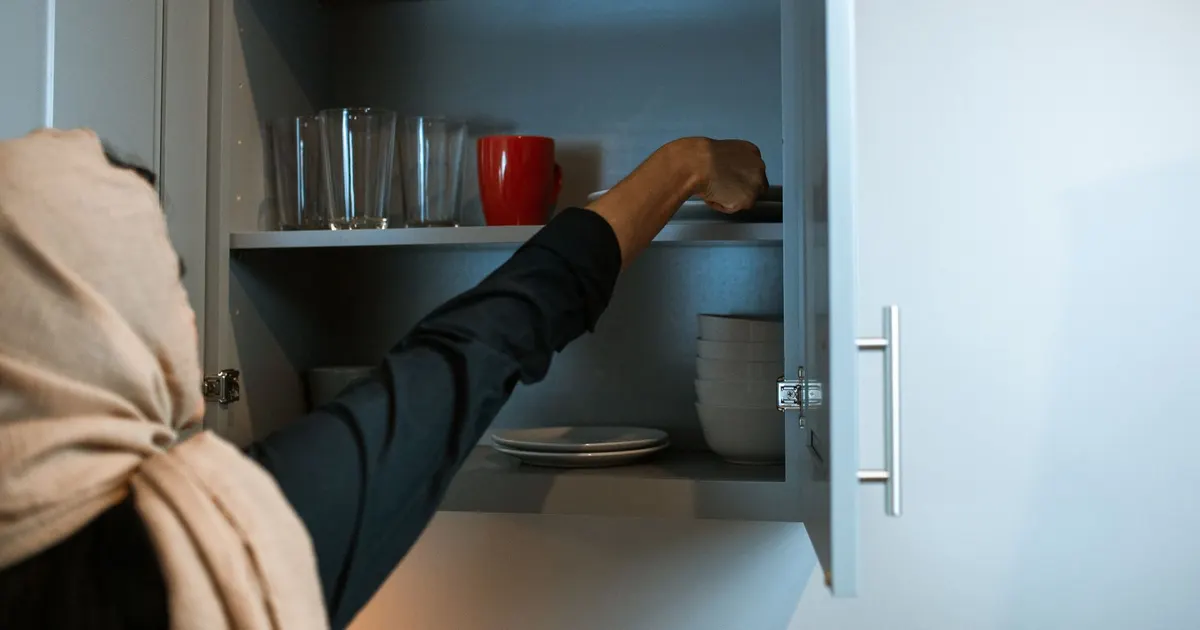
Photo: RDNE Stock project / Pexels
The bathroom spray gives up on a Sunday evening, as it always does. You reach under the sink and find three unopened refill pouches from a January burst of enthusiasm, a bottle of concentrate you never got round to diluting, and a trigger sprayer that dribbles down your wrist every time you use it.
Refill cleaning subscriptions rarely go wrong because the products are bad. They go wrong because of three things nobody checks before signing up: the water coming out of your taps, the shape of your cupboard, and whether you are the sort of person who will actually mix a concentrate on a Tuesday night. Get those right and the subscription quietly earns its place. Get them wrong and you have paid to store plastic.
What a Refill Cleaning Subscription Usually Includes
Most of them work the same way. You get a starter set of bottles, often a trigger sprayer, a bathroom spray, maybe a glass cleaner and a floor cleaner, and then a repeat delivery of refills: pouches of ready-mixed liquid, small bottles of concentrate, or tablets and drops you dissolve in water.
Some let you build your own list each time. Others send a fixed box and let you swap one or two items. The first suits a household with strong opinions. The second suits anyone who cannot be bothered to choose, as long as they are happy to end up with things they would not have bought.
The two shapes, and who they suit
A build-your-own top-up works if you know exactly which two or three products you get through. A fixed box works if you would rather not think about it, but check what happens to the items you never use, because a box that sends floor cleaner to a flat with no hard floors is just clutter on a schedule.
Matching Refills to the Way You Clean
Here is the bit almost everyone skips: your water.
If you live in London, the south east, East Anglia or much of the Midlands, you are in a hard water area. That means limescale on taps, cloudy shower screens and a kettle that looks geological. A hard water household will get through bathroom spray and descaler at a rate that surprises them, and will barely touch glass cleaner. Soft water areas, which is most of Scotland, Wales, the north west and the south west, are the opposite: less scale, less descaler, and a bottle of bathroom spray that lasts for months.
So before you pick a mix, think about what you actually scrub. Two bathrooms, a dog and a household of muddy boots between November and February means floors and bathroom surfaces will disappear fast. A one-person flat with a shower and no garden will not.
Then there is the question of how you clean. Some people spray everything. Others use hot water, a cloth and one all-purpose bottle, and reach for anything else twice a year. If you are in the second group, a big curated box is a waste. Order the all-purpose, add a descaler if your water is hard, and stop there.
Bottles, Concentrates and Storage Space
This is where enthusiasm meets the U-bend.
Ready-mixed refills are easy: pour, screw the top back on, done. They are also heavy, bulky and mostly water. Concentrates are small, stack neatly and take up a fraction of the space, but they ask something of you. You need a jug or a spare bottle, a bit of counter space, and the patience to dilute properly rather than guess. Tablets and drops take up the least room of all and are the fiddliest to use, which is why they suit people with tiny flats and a high tolerance for faff.
Before you order a starter set, do this:
- Measure the height between the shelf and the underside of the U-bend, then measure the tallest bottle you already own.
- Count how many bottles you can stand up without them falling over when you pull one out.
- Check whether your cupboard is damp. Cardboard refill pouches do not enjoy a damp cupboard next to a washing machine.
Two more things worth knowing. Keep one decent trigger sprayer and refill it, because the cheap ones start dribbling within a couple of months and you will blame the product. And never decant into an unlabelled bottle. A plain bottle of clear liquid under a sink with children or pets around is an accident waiting to happen, and the original label is the only safety information you have.
Fitting Refills Into Your Cleaning Routine
A subscription you forget about is just a delivery you resent. The trick is to attach the refill to something you already do.
If Saturday morning is bed-changing and bathroom day, that is when you top up the spray bottle. If you clean the kitchen floor on a Wednesday, the floor concentrate lives next to the mop, not in a cupboard three metres away. Friction is what kills these habits. If diluting takes a trip to another room, it will not happen.
One in, one out is the rule that keeps this sane. Finish a bottle, then open the next one. Do not open all of them because they arrived together.
Skip months rather than stockpiling. Most services let you pause a delivery, so use it: December if you are away, and any month when the cupboard is already full. Spring is the exception worth planning for. That March or April deep clean eats through more product than any other few weeks of the year, so a delivery around then is genuinely useful.
And choose a delivery day you are usually in, or somewhere sensible for it to be left. A box of liquids sitting on a doorstep in the rain is not a good look.
Questions to Ask Before You Start
Ask these before you hand over your details, not after the third delivery:
- Can I skip or pause, and how much notice do you need? If pausing is buried three menus deep, treat that as a warning.
- Do I choose the products, or does the box choose for me?
- Are the dilution instructions clear, and is there a measuring cap or jug included?
- What happens if something arrives leaking or damaged?
- Can I change my mix by season, or am I locked into the same box all year?
- What is the packaging made of, and can the empties go back?
If a service cannot answer those plainly, that tells you more than any amount of green wording on the homepage.
Then go and look under your sink. Count the bottles you genuinely finished in the last six months. That number, not the size of the biggest bundle, is the subscription you need.