How to Buy a Slow Cooker Online in the UK: Size, Settings and Cleaning
A slow cooker is one of the few gadgets that genuinely suits a British winter — but the wrong size or pot ends up in a cupboard. Here's what to check before you order one online.

6 min read
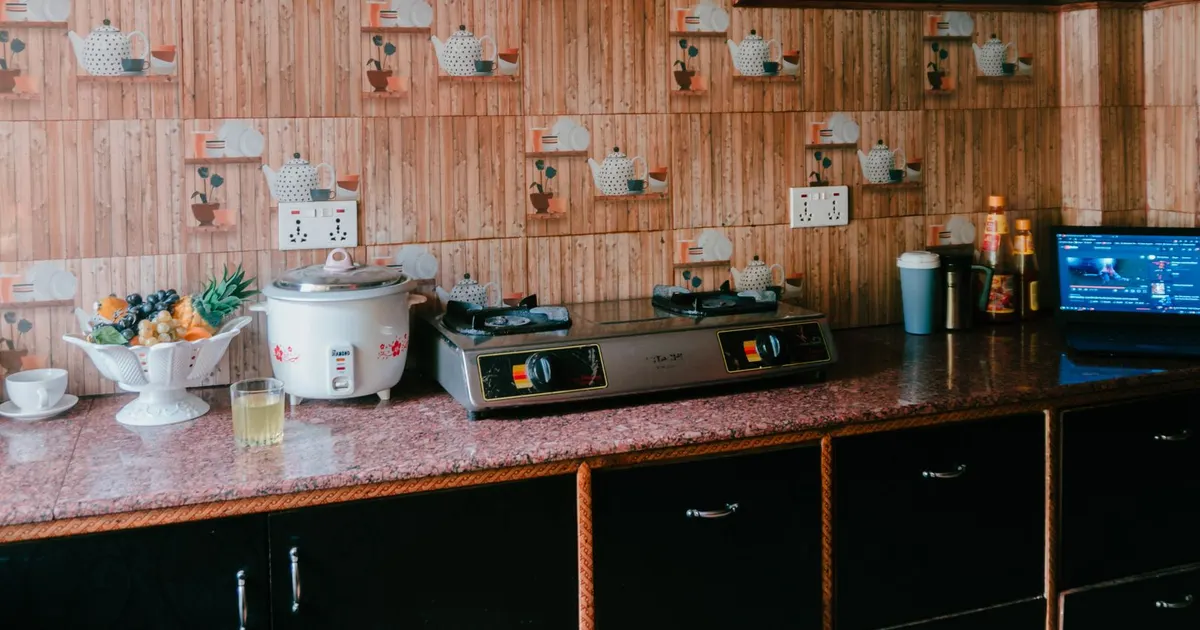
Photo: kabita Darlami / Pexels
Why a slow cooker earns its place in a British kitchen
By November, most of us are eating dinner in the dark. A slow cooker is one of the few kitchen gadgets that genuinely suits that: you load it in the morning, and by the time you're home and the heating's on, there's something hot waiting. No hovering over a pan, no oven running for three hours.
It suits small kitchens and flats too. It throws out far less heat and steam than an oven, it can sit in a corner, and it's gentler on the meter than leaving the oven on for a long cook. That last point matters more than it used to.
The trouble is the choice. Search for one online and the listings blur into a wall of similar-looking pots. Here's how to cut through it.
Start with capacity, not features
Capacity is the one decision you can't undo. Everything else is a preference.
Cooking for one or two
A pot of around 1.5 to 3 litres is plenty. You want it filled at least half way for even cooking — a big pot with a single portion in the bottom dries out at the edges and scorches.
Families and batch cooking
Go for roughly 3.5 to 6 litres. If you want leftovers for the freezer, size up rather than down. Oval shapes take a whole chicken or a rolled joint far better than round ones.
The trap of buying big "just in case"
A huge pot you rarely fill takes up worktop space, weighs a ton when full, and cooks worse for small amounts. Buy for the household you have, not the dinner party you might host.
Shape and type: round, oval or multi-cooker
- Round: simple, compact, good for stews, curries, soups and porridge. Easier to store.
- Oval: better for joints, whole birds, layered dishes and big batches of chilli.
- Multi-cookers: slow, pressure, steam and sauté in one body. More functions, more to go wrong, bigger footprint. Only worth it if you'd genuinely use the pressure setting.
Then there's the searing question. Some models have a sauté mode, or a pot you can put straight on the hob. If you like browning meat first, that saves you a second pan and a washing-up round. If you never bother, don't pay for it.
Controls and timers that actually matter
A dial with three settings will cook a stew perfectly well. A digital panel adds a few things worth having:
- a timer that switches to keep-warm when the cooking finishes
- automatic shut-off
- a delay start, so it begins while you're out
If your working hours are unpredictable, keep-warm is the function to prioritise. Delay start is only useful if you're sensible about it — leaving raw meat sitting at room temperature for hours before the cooking begins is not a good idea, especially in a warm kitchen.
Have a look at the display, too. Buttons that sit flush are easier to wipe than the raised sort that collect congealed gravy. They all collect it eventually.
The inner pot matters more than the badge
The pot is what you'll lift, wash and probably drop.
- Ceramic: even heat, heavy, and prone to cracking if you shock it with cold water while it's hot.
- Non-stick aluminium: lighter and easier to lift, but needs wooden or silicone tools.
- Cast: excellent heat, seriously heavy. Check you can lift it once it's full.
Check whether the pot is dishwasher-safe, whether it can go in the oven, and — crucially — whether replacement pots and lid seals are sold separately. A slow cooker with a chipped pot and no spare part is landfill with a plug on it.
How to read the listing properly
Before you click buy, hunt down the details that listings love to bury:
- the wattage, which tells you roughly how much power it draws
- full dimensions, including the lid handle and any feet
- weight, both empty and full — a six-litre pot of stew is not light
- cable length, because sockets are never where you want them
- what's actually in the box: rack, ladle, recipe booklet, spare seal
- whether spare parts are available
If a listing won't tell you the dimensions, treat that as your answer.
Measure your kitchen before you order
This is the step people skip and then regret.
- Worktop clearance: will it sit under the wall cupboards? Steam needs somewhere to escape.
- Storage: if it lives in a cupboard, measure the shelf and the door swing.
- The socket: you want it near the cooker, not trailing across a walkway.
- Where it cooks: not under a wooden shelf, not jammed against the toaster.
A slow cooker is a leave-it-alone appliance, which means it sits out for hours at a time. If it hasn't got a proper home, it becomes clutter.
Cleaning and everyday care
- Let the pot cool before washing. Thermal shock is what kills ceramic.
- Soak it in warm water with a drop of washing-up liquid; most residue lifts on its own.
- Wash the lid seal properly — that's where smells linger.
- Never submerge the base or the cable.
- Dry the outside of the pot before it goes back in the housing.
What to skip
- Enormous capacities for one or two people
- Attachments you'll use twice and then lose
- "Set and forget" claims — you still need to think about timings
- Thin non-stick that scratches within weeks
- Any model where the pot isn't replaceable
Returns and the first cook
Keep the box and packaging until you've cooked in it at least twice. Read the returns process before you order, particularly whether you'd have to post it back yourself — a heavy ceramic pot is an awkward parcel to send, and some retailers arrange collection instead. Read the policy, not the star rating.
For the first cook, make something forgiving: a stew, a chilli, a batch of soup. Learn how your model behaves — they all run a little hot or a little cool — before you trust it with a Sunday roast.
A quick checklist
- Capacity suited to your household, not your ambitions
- A shape that fits what you actually cook
- A timer with keep-warm
- A pot you can lift, wash and replace
- Dimensions measured against your worktop and cupboard
- Wattage and cable length checked
- Returns process read before ordering
- Packaging kept until you're sure
The verdict
A slow cooker is one of the most useful kitchen buys for a British winter, but only if you buy for the kitchen you actually have. Get the capacity and the pot right, ignore the extra modes you'll never use, and read the returns policy before you pay. Do that, and it'll earn its worktop space from October through to March — and probably well beyond.